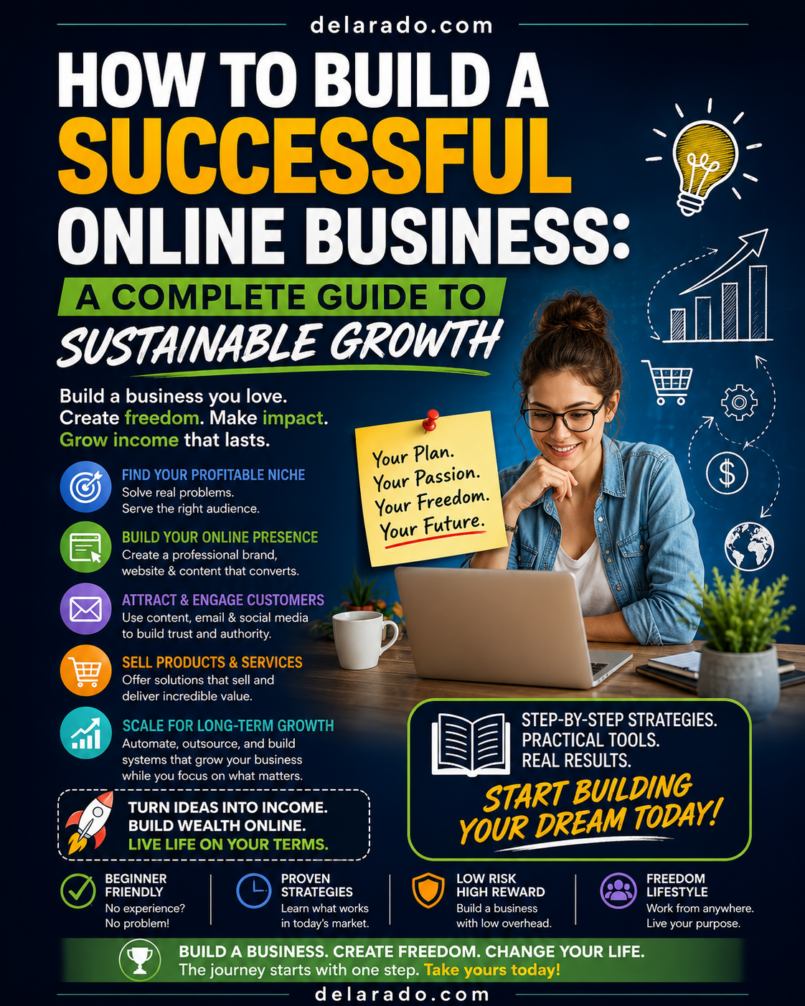
The truth about online business success: A successful online business is not built by buying random software, copying someone else’s funnel, or chasing every new marketing trend. It is built by solving a real problem for a clearly defined audience, creating a useful offer, communicating honestly, delivering excellent customer value, and improving the business through consistent testing.
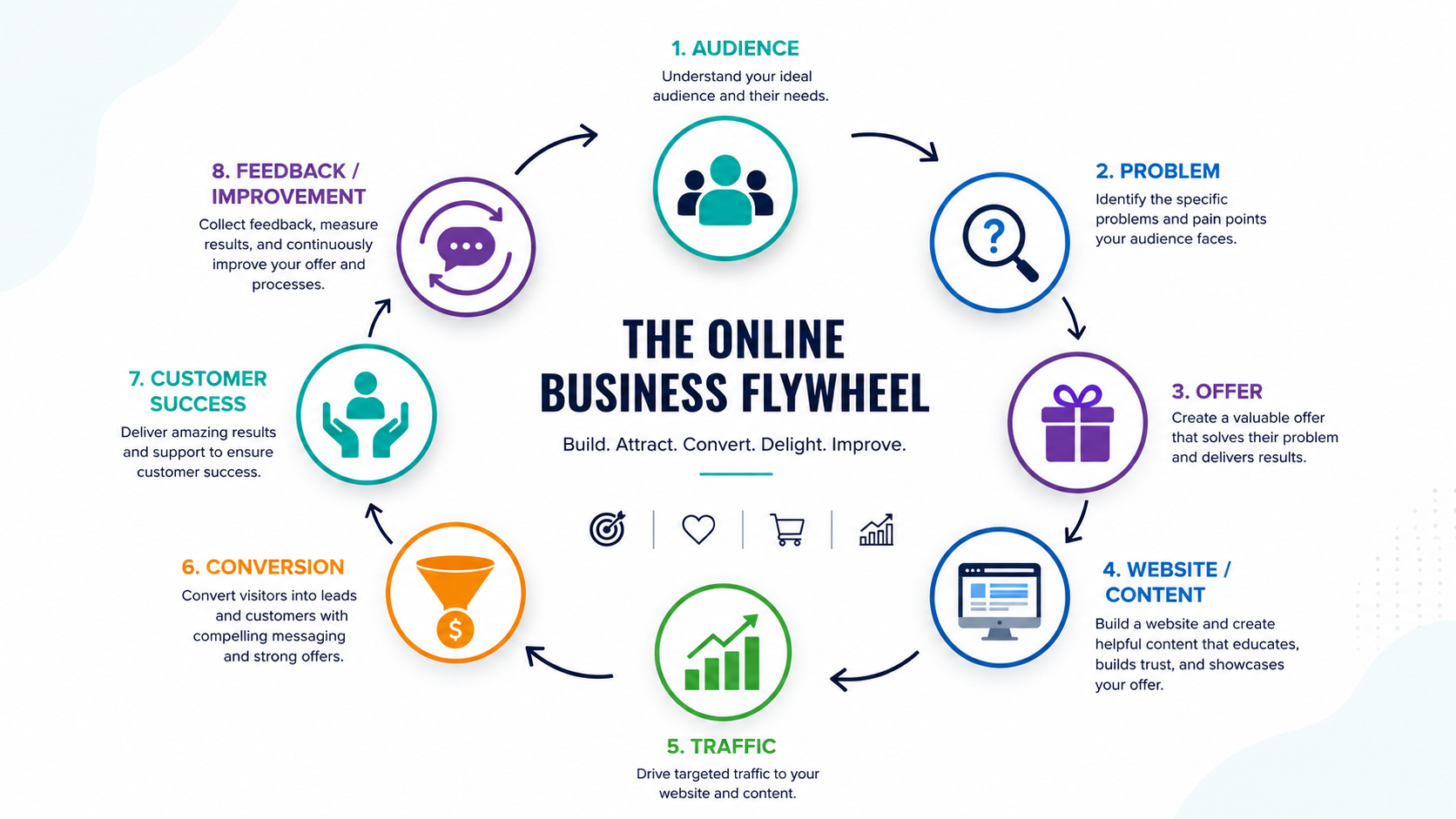
Tools can help, but tools are not the business. A website builder cannot replace a clear offer. A sales funnel cannot replace trust. AI cannot replace original thinking. SEO software cannot replace useful content. The strongest online businesses use technology to save time and improve customer experience while keeping strategy, ethics, and long-term value at the center.
Build the Right Foundation First
Before choosing a logo, buying ads, building a funnel, or publishing content, define the foundation of the business. A sustainable business has a clear customer, a clear problem, a clear solution, and a clear way to make money.
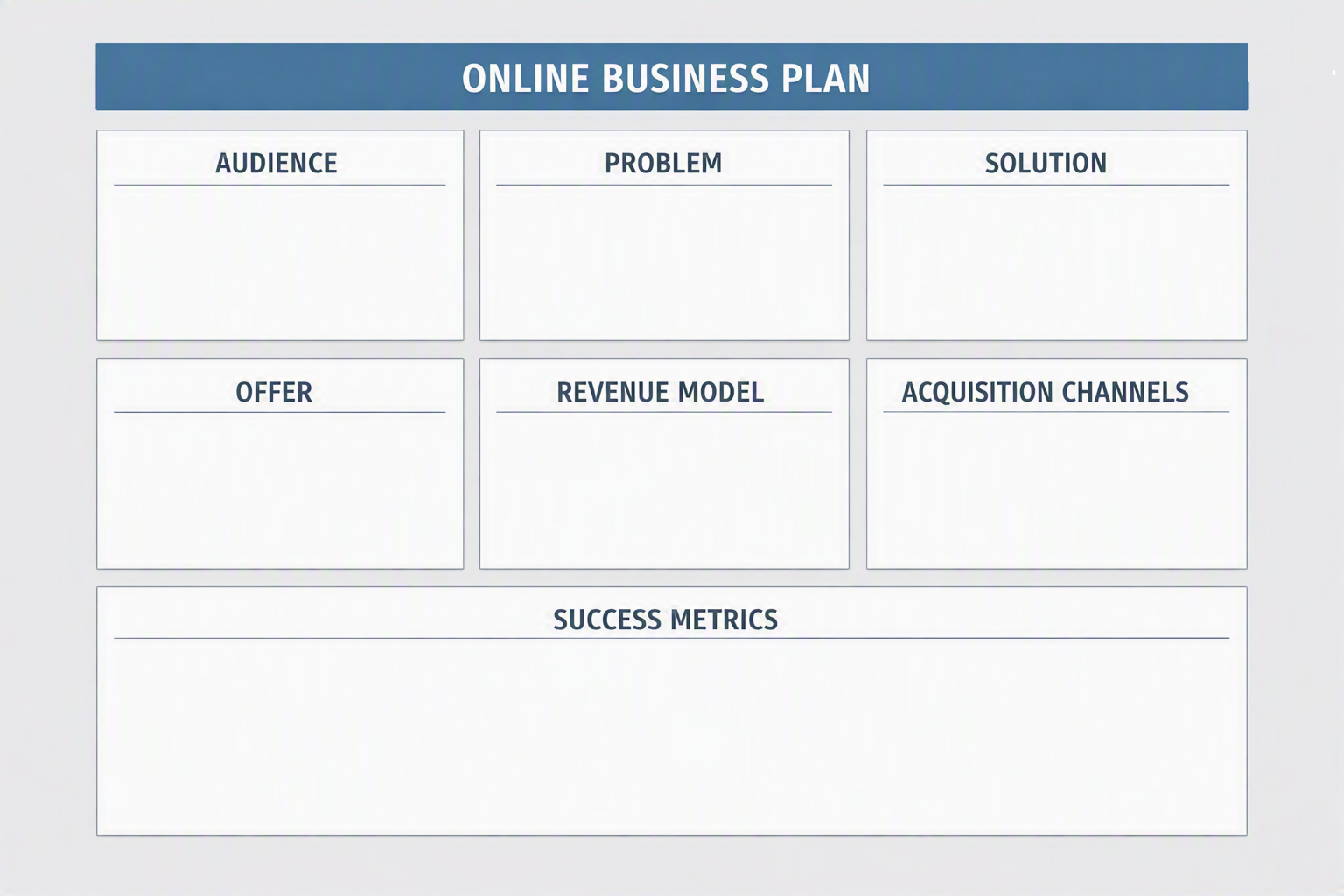
A business plan does not need to be complicated, but it should answer important questions: What is being sold? Who needs it? Why would they choose it? How will they find it? How will the business deliver it? What will it cost to operate? How will success be measured?
Write a One-Page Business Plan
- Audience: Define the specific type of person or business you want to help.
- Problem: Describe the expensive, frustrating, urgent, or meaningful problem they face.
- Solution: Explain how your product, service, content, or system helps solve it.
- Offer: State exactly what buyers receive and why it is valuable.
- Revenue model: Choose how the business earns money, such as product sales, services, subscriptions, affiliate commissions, advertising, consulting, memberships, or licensing.
- Acquisition channels: Decide how people will discover the business, such as SEO, YouTube, Pinterest, email, partnerships, social media, referrals, ads, or communities.
- Success metrics: Define measurable goals, such as leads, sales, profit, email subscribers, retention, or repeat purchases.
Start with one audience and one core offer. Expansion becomes easier after the business proves that it can solve one problem well.
Choose a Profitable and Helpful Niche
A niche is the focused market segment a business serves. A strong niche is specific enough that customers feel understood but broad enough to support a real business. “Fitness” is broad. “At-home strength training for busy adults over 40 with limited equipment” is more focused.
The best niche is not always the trendiest niche. It is one where you can understand customer problems, develop useful solutions, create original content, and remain interested long enough to build expertise and trust.
Look for These Signs of a Good Niche
- People actively search for answers, products, services, or solutions.
- The problem is recurring, urgent, expensive, emotional, or tied to a clear goal.
- Customers already spend money on related products or services.
- You can create a distinctive angle, process, resource, or customer experience.
- You can explain the topic clearly and continue learning about it.
- The market has room for honest, useful, differentiated content.
- The business can serve customers ethically and comply with applicable laws.
Research Before Building
Use customer interviews, online forums, reviews, comments, competitor research, keyword research, support requests, surveys, and social-media conversations to learn how potential customers describe their problems. Pay attention to the exact words customers use. Their language should shape product names, headlines, article topics, video scripts, FAQs, and sales pages.
Helpful tools: SE Ranking can help research search topics, keywords, competitors, ranking opportunities, backlinks, and technical SEO priorities. HubSpot can help organize customer information, sales conversations, and marketing activity. Google Trends, Google Search Console, AnswerThePublic, Exploding Topics, SparkToro, and Reddit can also help validate real audience interest.
Understand Your Target Customer
Successful businesses focus on customers, not features. People do not buy a course because it has 42 videos; they buy because they want a result. They do not buy website hosting because they want server space; they buy because they want a reliable website that helps their business grow.
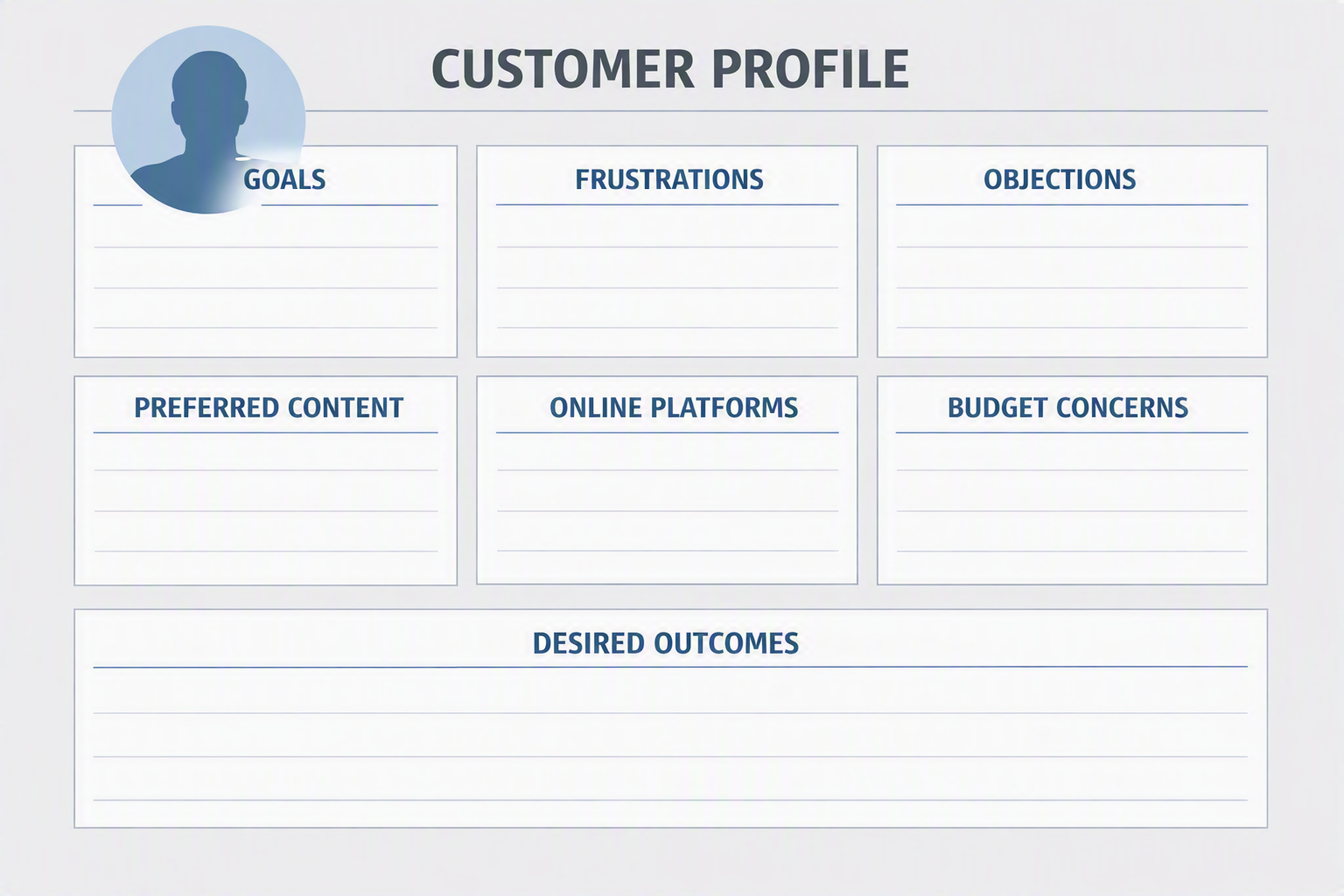
Create a Customer Profile
- What is the customer trying to achieve?
- What is frustrating, expensive, confusing, or time-consuming for them?
- What have they already tried?
- What objections keep them from buying?
- What outcome would make the purchase feel worthwhile?
- Where do they spend time online?
- What type of content do they trust?
- What language do they use to describe the problem?
- What budget, timeline, and risk concerns do they have?
Use this information to make better decisions. It will improve the website, content plan, product packaging, support materials, FAQs, checkout page, email sequence, and social-media messaging.
Create an Offer People Actually Want
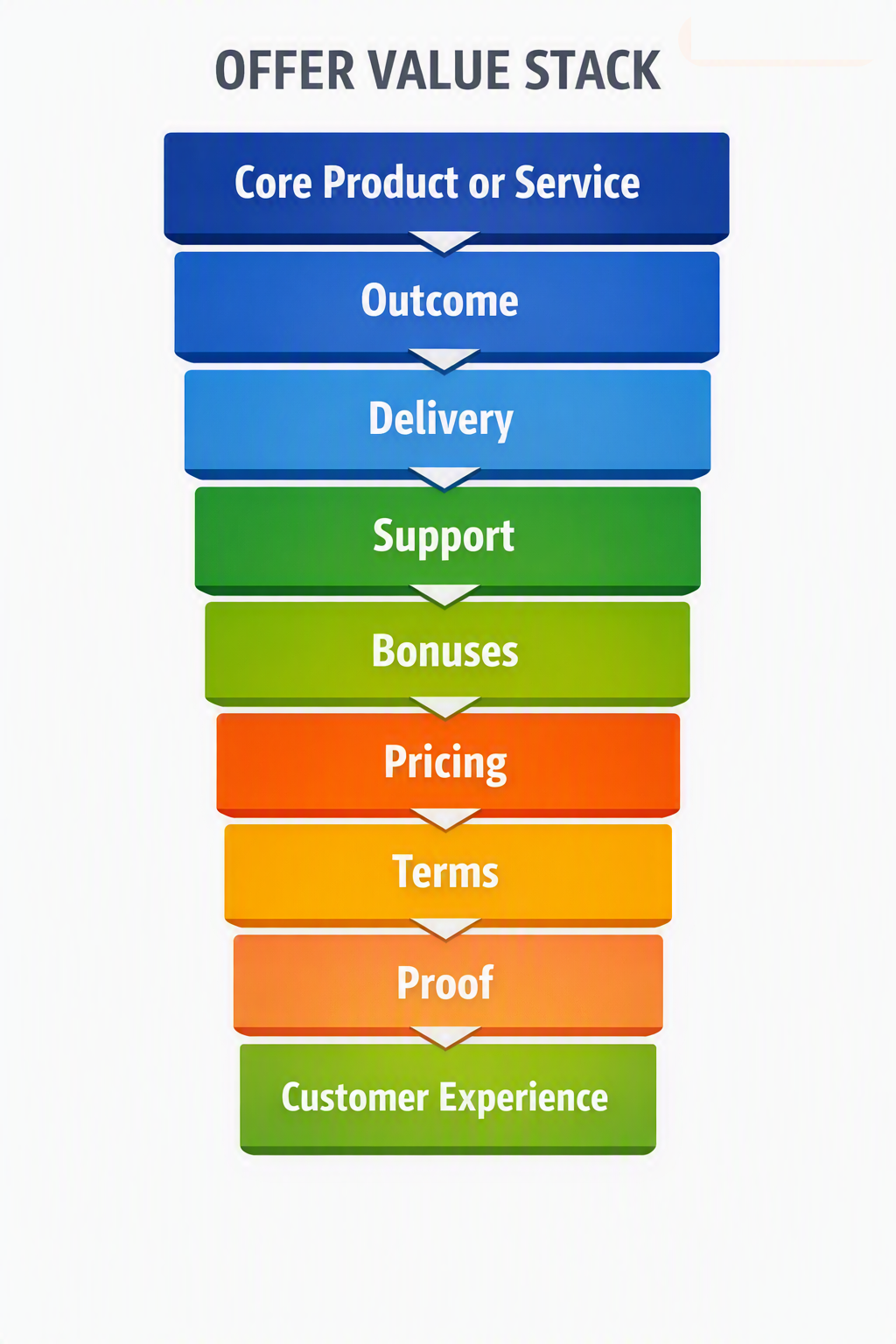
An offer is more than a product. It is the complete package a customer receives: the outcome, features, delivery method, price, support, bonuses, terms, and experience. A good offer makes it easy for the right customer to understand the value and decide whether it is a fit.
Elements of a Strong Offer
- A clearly defined customer problem.
- A realistic and specific outcome.
- A product or service that delivers meaningful value.
- A clear explanation of what is included.
- Simple pricing and payment terms.
- Transparent refund, cancellation, or delivery policies.
- Proof that is honest, relevant, and properly disclosed.
- Customer support before and after purchase.
- A reason to buy now that is real, not artificially manufactured.
Business Models to Consider
- Digital products such as eBooks, templates, guides, prompt packs, and printables.
- Online courses, workshops, coaching, and communities.
- Freelance services, consulting, design, writing, marketing, or website development.
- Affiliate marketing through genuinely useful reviews, tutorials, comparisons, and recommendations.
- eCommerce stores selling physical or digital products.
- Membership sites and paid newsletters.
- Software products, micro-SaaS tools, or subscription services.
- Lead-generation websites that connect customers with local or professional services.
Do not make unrealistic claims. Avoid “guaranteed income,” “instant success,” “no work required,” or “proven to make everyone rich” language. Honest positioning builds stronger customers, lower refund rates, better referrals, and a healthier reputation.
Build an Online Home You Control
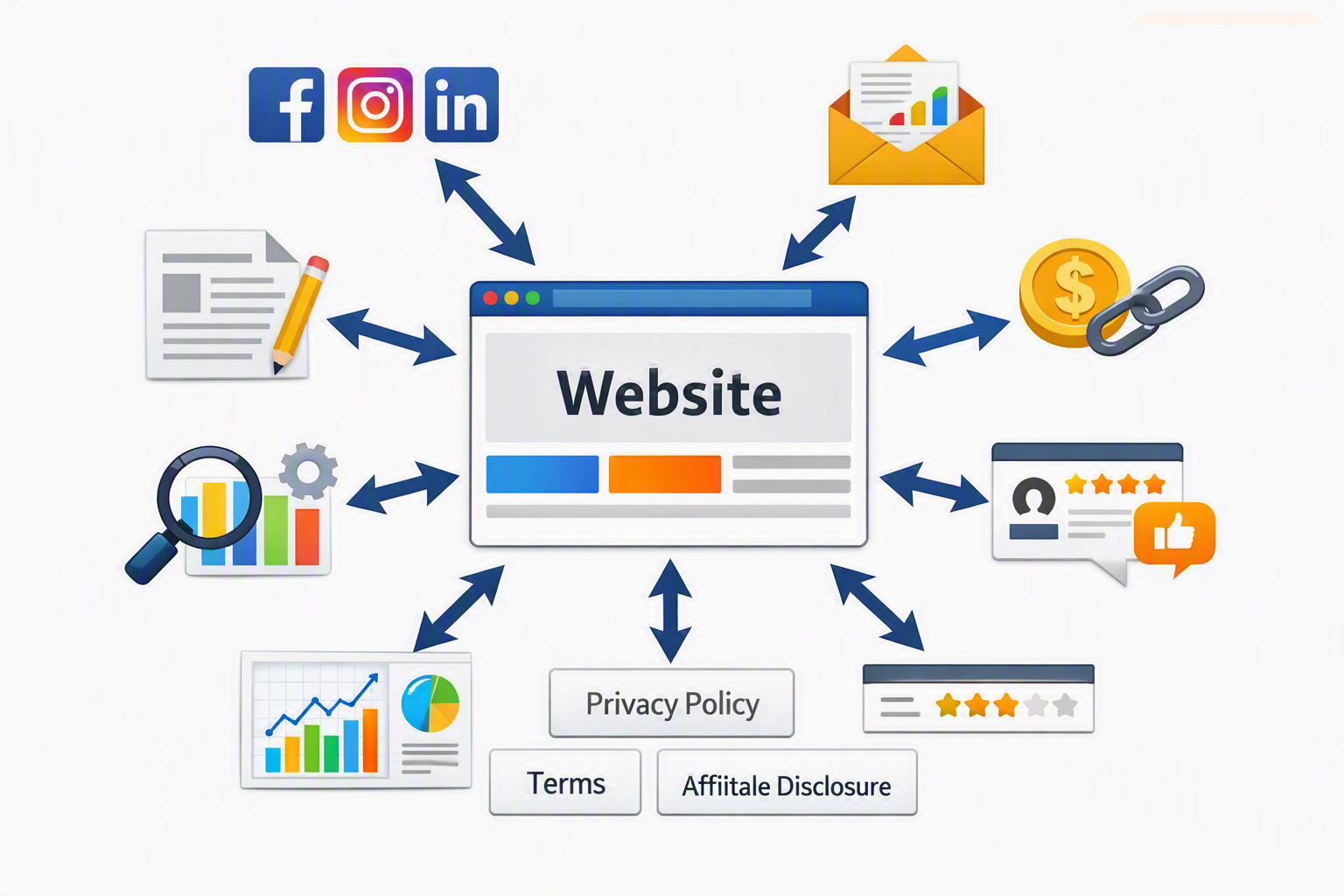
Social-media platforms are useful, but a website remains one of the most important assets an online business can own. A website gives you more control over branding, search visibility, content, email collection, checkout links, customer education, and long-term business resilience.
Choose the Right Website Platform
DreamHost and SiteGround
DreamHost and SiteGround are hosting options for people building WordPress websites, blogs, business websites, eCommerce stores, and content platforms. Hosting is the foundation that stores website files and makes the site available online. Choose hosting based on performance needs, support, budget, expected traffic, WordPress requirements, storage, backups, security tools, and renewal pricing.
DreamHost may be useful for users who want web hosting, managed WordPress options, AI-assisted website-building tools, domains, VPS hosting, dedicated hosting, and eCommerce support. SiteGround may be useful for users who want WordPress-focused hosting, performance tools, security features, backups, staging, and website-management tools.
Wegic
Wegic is an AI website-building option that can help people create website concepts and pages through conversational prompts. It may be useful for rapidly creating a simple website draft, landing page, portfolio, or early business presence. Always review AI-generated copy, legal pages, images, and claims before publishing.
Systeme.io and ClickFunnels
Systeme.io and ClickFunnels are funnel-building platforms that can help create landing pages, opt-in pages, sales pages, checkout flows, email automations, and simple online business funnels. They can be useful when a business needs a focused conversion path rather than a large content website.
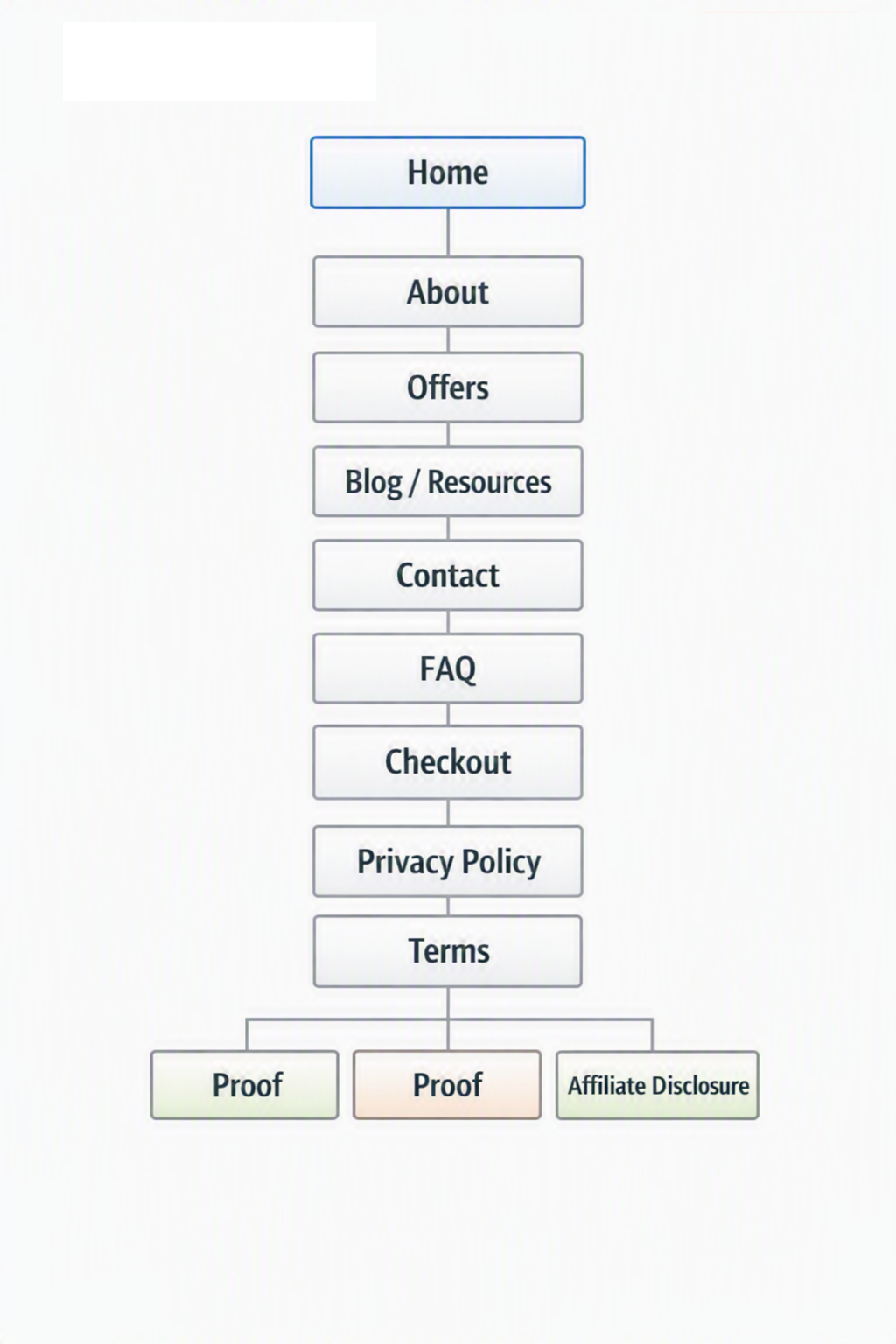
Essential Website Pages
- Homepage explaining what the business does and who it helps.
- About page that establishes credibility and purpose.
- Product, service, or offer pages with clear details.
- Contact page with legitimate support information.
- Privacy Policy and Terms of Use.
- Affiliate disclosure when affiliate links are used.
- Refund, cancellation, shipping, and delivery policies where relevant.
- FAQ page that answers purchase objections clearly.
- Blog, resource center, or learning hub for helpful content.
Create Content That Builds Trust
Content is one of the most durable ways to attract the right audience. Helpful articles, tutorials, videos, emails, case studies, checklists, and demonstrations can continue to bring value long after they are published.
The goal is not to produce the most content. The goal is to produce the most useful content for a defined audience. One deeply helpful guide, original review, comparison, video tutorial, or downloadable checklist can outperform dozens of generic posts.
Content Types That Support Online Business Growth
- Beginner guides that answer common questions.
- Product reviews based on actual testing and clear limitations.
- Comparison articles for buyers deciding between options.
- How-to tutorials that solve a practical problem.
- Case studies with verifiable, permission-based results.
- Checklists, templates, calculators, worksheets, and downloadable resources.
- Video demonstrations and product walkthroughs.
- Email newsletters that provide recurring value.
- FAQ content based on support questions and buyer objections.
- Original research, expert interviews, and curated resource hubs.
AI Writing and Research Tools
AI can speed up outlining, summarizing, idea generation, content planning, proofreading, translation, and rewriting. It should not replace firsthand experience, fact checking, expert judgment, or original insights.
Useful tools may include ChatGPT, Claude, Gemini, Perplexity, Notion AI, Jasper, Grammarly, Frase, Clearscope, Surfer SEO, and MarketMuse. Use them to assist the process, then edit heavily for accuracy, originality, brand voice, and user value.
PLR Funnels, Binge Ninja, One Way Funnels, Digital Academy Fortune, Challenge Profits Fortune, Life Thriver Income Game, AI Business Bundle, AI Cash Clone, Wealth Signal, The Genius Wave, Tap and Bank, and similar digital products may contain templates, training, funnel concepts, resale content, business resources, or marketing materials. Review licensing rights, product quality, claims, refund policies, customer support, and market fit before recommending, reselling, or using any of these products. Never present unverified earnings claims as typical results.
Use SEO and AI Search Responsibly
Search engine optimization helps a website become easier for search engines and people to understand. It can lead to long-term traffic, but it does not guarantee rankings. Effective SEO combines helpful content, technical quality, clear site structure, relevant links, good user experience, and ongoing updates.
Use SE Ranking for Practical SEO Work
SE Ranking can be used for keyword research, rank tracking, website audits, competitor research, backlink monitoring, local SEO, reporting, and AI search visibility. Use the data to identify opportunities, not to stuff keywords into pages.
People-First SEO Principles
- Write for a real audience with a real question or problem.
- Use original knowledge, testing, screenshots, examples, or analysis.
- Match the search intent behind a query.
- Use clear headings, internal links, descriptive titles, and readable formatting.
- Update content when products, prices, rules, facts, or best practices change.
- Use accurate author information, disclosures, policies, and contact details.
- Improve technical issues such as broken links, slow pages, poor mobile layout, and indexing problems.
- Earn relevant links by creating resources people genuinely want to cite or share.

Do not publish large volumes of low-value AI content simply to target keywords. Search engines and readers both benefit more from content with direct experience, clear explanations, useful examples, and honest limitations.
Use Video and Visual Content to Explain and Sell
Video can build trust faster than text alone because it allows people to see a product, process, demonstration, screen recording, or person behind a business. It is especially useful for tutorials, product demos, testimonials, onboarding, social clips, educational content, and sales pages.
Video Creation Tools
Synthesia.io
Synthesia can help create AI-avatar videos from scripts. It can be useful for training, onboarding, product explainers, multilingual videos, internal communication, and structured educational content. Review all scripts, visuals, translations, and avatar usage carefully.
InVideo.io, CapCut, and Kling.ai
InVideo.io can support AI-assisted video creation and editing. CapCut is useful for editing short-form and long-form content, adding captions, creating social clips, and improving visual presentation. Kling.ai can help generate AI video content and creative visuals. Use licensed assets, respect platform rules, and avoid misleading synthetic content.
Instadoodle and Imagine Art
Instadoodle can help create whiteboard-style explainer visuals, while Imagine Art can support AI image creation for marketing graphics, thumbnails, concept images, blog visuals, and creative assets. Always review commercial-use rights and avoid using images that create false impressions about products or results.
ElevenLabs
ElevenLabs can help create AI voiceovers, narration, dubbing, and audio assets. It may be useful for video narration, course content, product demos, podcasts, and multilingual content. Only use voices you have permission to use, and do not clone or imitate a person’s voice without explicit consent.
Tube Claw Bundle
Tube Claw Bundle may be relevant for video research, channel analysis, content workflows, or YouTube-oriented marketing depending on the tools included in the bundle. Review the current product scope, licensing, claims, and support before relying on it as part of a business system.
Video Content Strategy
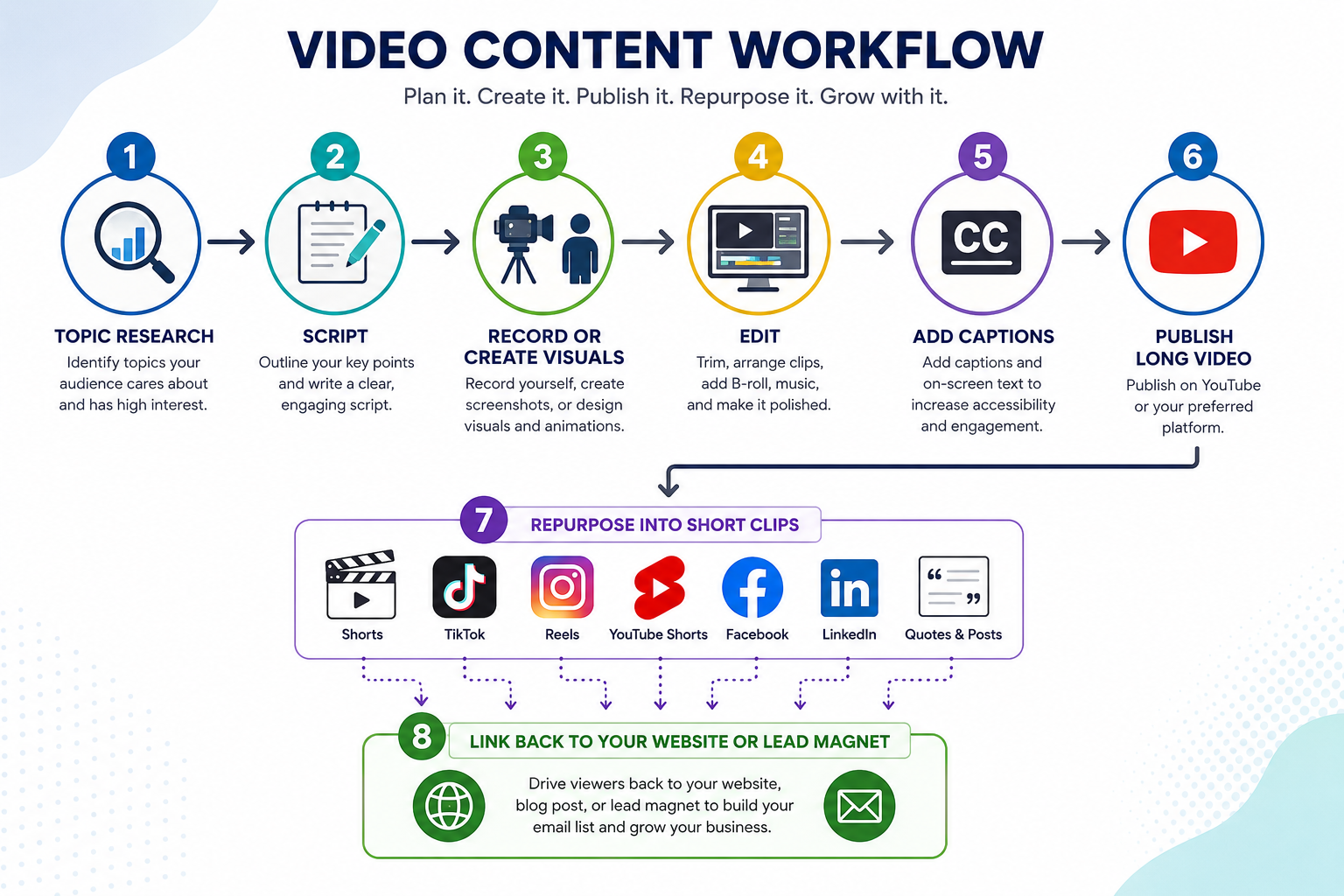
- Create one long tutorial, then repurpose it into shorter clips.
- Show real screens, real product use, and real steps whenever possible.
- Add captions because many viewers watch with sound off.
- Use a clear hook in the first few seconds.
- Teach something useful before asking for a sale.
- Include one clear call to action.
- Embed important videos into related website articles.
- Use accurate titles, descriptions, chapters, thumbnails, and transcripts.
Build Ethical Sales Funnels
A sales funnel is simply the path a potential customer takes from discovering a business to becoming a buyer. The strongest funnels reduce confusion, answer questions, build trust, and make the next step easy.
A Simple Online Business Funnel
- Helpful content attracts a relevant audience.
- A free resource, newsletter, consultation, or low-cost offer captures interest.
- Email or educational content builds trust and answers objections.
- A sales page clearly explains the main offer.
- A checkout page processes the purchase securely.
- Onboarding helps the customer get value quickly.
- Support, follow-up, and relevant offers encourage retention and referrals.
Tools for Funnels and Checkout
ThriveCart
ThriveCart can be useful for selling digital products, courses, coaching, memberships, subscriptions, and services. It supports checkout pages, order bumps, one-click upsells, payment plans, affiliate management, automations, and course-related workflows. Use upsells responsibly and keep pricing, billing, and refund terms clear.
Systeme.io
Systeme.io can help create landing pages, sales funnels, email sequences, checkout workflows, simple course delivery, and automations. It may be a practical option for beginners who want several online business tools in one system.
ClickFunnels
ClickFunnels can help businesses create sales funnels, landing pages, opt-in pages, order forms, webinars, and follow-up workflows. It can be helpful for businesses with a defined offer and clear funnel strategy. A funnel should improve the customer journey, not use pressure tactics or deceptive scarcity.
Funnel Rules That Protect Trust
- Make the main offer easy to understand.
- Show the total price and payment terms clearly.
- Explain subscription billing and cancellation steps before purchase.
- Use real testimonials and disclose material relationships.
- Make order bumps and upsells optional.
- Provide a simple way to contact support.
- Deliver what was promised promptly.
- Honor refund policies and handle complaints professionally.
Attract Qualified Traffic, Not Just More Traffic
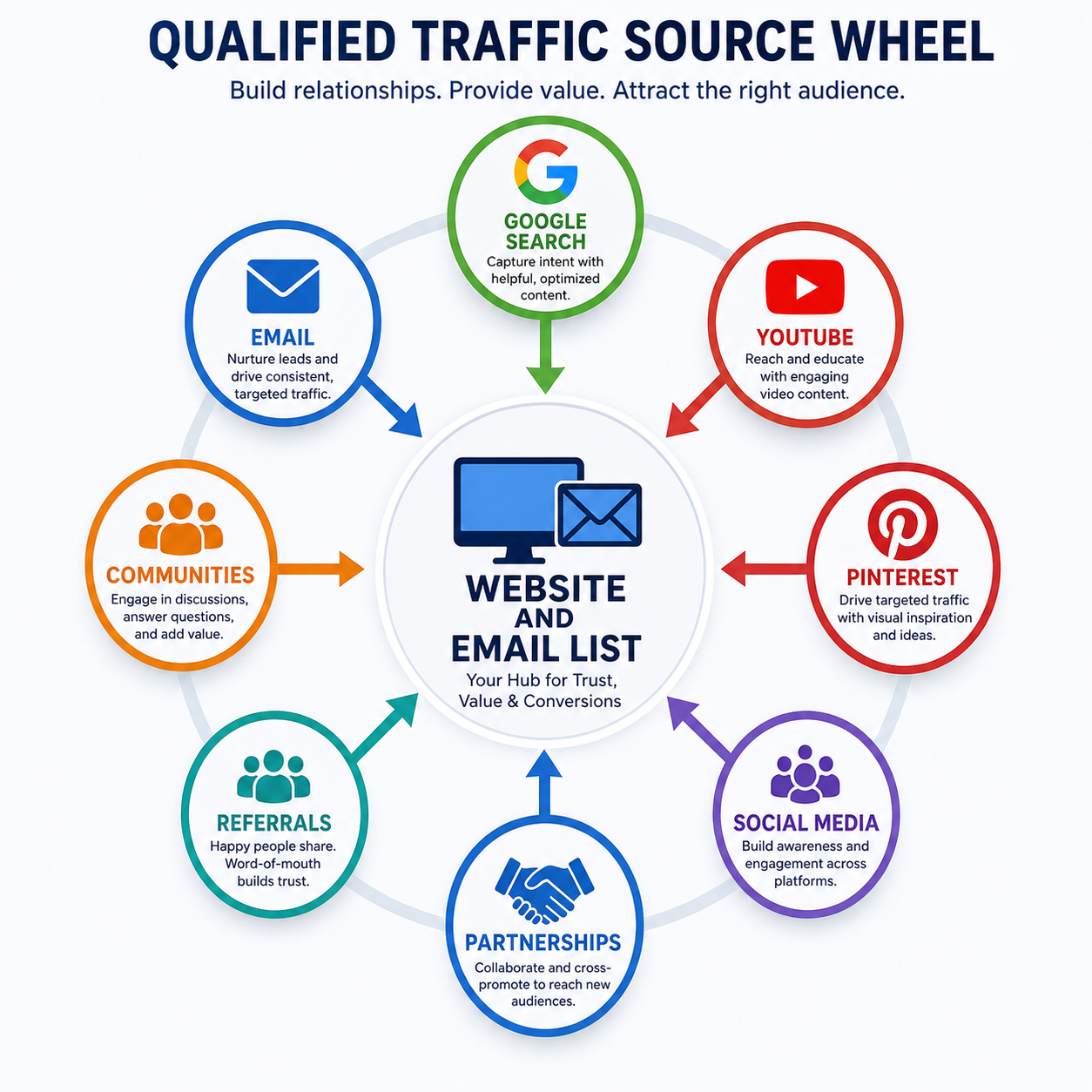
Traffic is only valuable when it comes from people who are likely to care about the offer. A small, relevant audience can outperform a large, uninterested audience. Focus on channels that match the customer and the business model.
Organic Traffic Channels
- Google search through helpful SEO content.
- YouTube tutorials, demonstrations, reviews, and educational videos.
- Pinterest content for visual niches, guides, products, and evergreen resources.
- Email newsletters that build trust over time.
- Social-media posts that teach, demonstrate, and start conversations.
- Partnerships, guest content, podcasts, and expert collaborations.
- Online communities where helpful participation is welcomed.
- Referral programs and satisfied-customer recommendations.
Social and Community Tools
GramGenies
GramGenies may help with Instagram-oriented content, account workflows, ideas, or engagement processes depending on its current features. Use it to support genuine content creation and relationship building, not automated spam or misleading engagement tactics.
HubSpot
HubSpot can help organize contacts, leads, email marketing, sales activity, customer relationships, forms, landing pages, and reporting. It can become especially valuable as a business moves from a few customers to a structured lead and customer pipeline.
Envato
Envato can provide creative assets such as templates, graphics, stock video, music, website themes, plugins, fonts, and design resources. Confirm licensing rights and avoid using generic assets without adapting them to the business brand and audience.
Use Automation Without Losing the Human Element
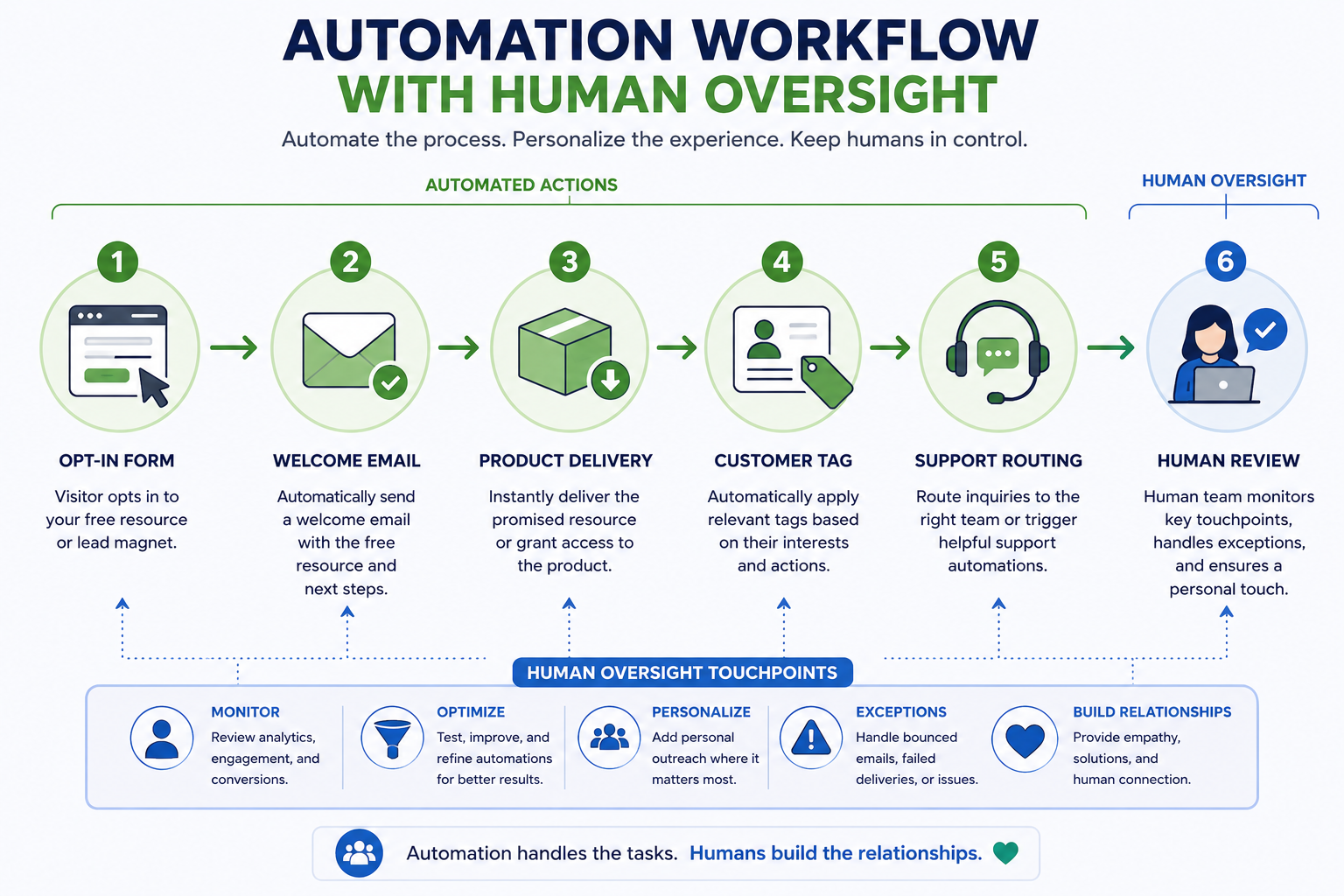
Automation can save time, reduce errors, and create a smoother customer experience. It should handle repetitive work so the business owner can focus on strategy, content, support, and relationship building.
Good Automation Examples
- Send a welcome email after someone joins a list.
- Deliver a digital product after payment.
- Tag customers based on the product they purchase.
- Send reminders before a webinar or appointment.
- Notify a team member when a high-value lead submits a form.
- Request feedback after a customer has time to use a product.
- Send course-access details after a successful purchase.
- Route support messages to the appropriate person or inbox.
Automation Tools to Consider
Zapier, Make, n8n, HubSpot, Systeme.io, ClickFunnels, ThriveCart, ActiveCampaign, ConvertKit, MailerLite, Brevo, and Google Workspace can support business automation depending on the workflow. Begin with one useful automation, test it thoroughly, and document how it works before adding more complexity.
Do not automate deceptive messages, fake engagement, impersonation, unsolicited spam, or unsupported claims. A business can automate delivery and follow-up while still communicating honestly and treating customers with respect.
Build a Better eCommerce Business
eCommerce can include physical products, digital products, subscriptions, print-on-demand goods, handmade items, wholesale products, and private-label brands. The most successful stores solve a clear customer need and create a reliable customer experience from product discovery through delivery and support.
Helium 10
Helium 10 is commonly used by Amazon sellers for product research, keyword research, listing optimization, inventory workflows, and marketplace analysis. It can be useful for evaluating product ideas and managing marketplace-related tasks, but it does not guarantee product demand, sales, or marketplace success.
eCommerce Success Checklist
- Validate demand before ordering significant inventory.
- Calculate product cost, shipping, fees, returns, advertising, taxes, and profit margins.
- Use clear product descriptions, accurate images, and honest delivery expectations.
- Make customer service easy to access.
- Use secure payment processing and clear refund policies.
- Build an email list rather than relying only on marketplace customers.
- Create helpful buying guides, comparison pages, and product tutorials.
- Track return reasons and customer feedback to improve the offer.
Track the Numbers That Actually Matter
Revenue is important, but it is not the only metric. A business can generate sales and still lose money due to high advertising costs, refunds, software expenses, chargebacks, taxes, inventory costs, or poor retention.
Important Online Business Metrics
- Website traffic by channel.
- Lead conversion rate.
- Email subscriber growth and engagement.
- Sales conversion rate.
- Average order value.
- Customer acquisition cost.
- Refund and chargeback rate.
- Customer lifetime value.
- Recurring revenue and churn rate for subscriptions.
- Net profit after expenses, taxes, commissions, and refunds.
- Content performance, rankings, and qualified leads from SEO.
- Customer-support response time and satisfaction.
Use Google Analytics, Google Search Console, HubSpot, ThriveCart reports, payment processor reports, SE Ranking, Looker Studio, and spreadsheet dashboards to review performance. Make decisions based on patterns over time rather than reacting to one day of results.
Daily and Weekly Online Business Success Plan
Consistency is more important than constantly switching strategies. A simple operating rhythm helps the business move forward while preventing tool overload and burnout.
Daily Priority Plan
- Review customer messages, sales, support requests, and urgent operational issues.
- Complete one activity that improves the offer, content, customer experience, or sales process.
- Create or improve one useful piece of content, such as an article section, email, video, graphic, product page, or FAQ.
- Promote existing helpful content through one appropriate channel.
- Review one key metric without making emotional decisions from short-term changes.
- Document what was completed and identify the next highest-priority task.
Weekly Growth Plan
- Publish or update one substantial piece of helpful content.
- Review keyword opportunities and improve one important existing page.
- Check website speed, forms, checkout links, affiliate links, and email automations.
- Review customer feedback, refunds, objections, and support questions.
- Test one improvement to an offer, landing page, email, or call to action.
- Build or strengthen one relationship with a customer, partner, creator, or industry contact.
- Review income, expenses, software costs, taxes, and profitability.
Monthly Growth Plan
- Review revenue, net profit, conversion rates, refunds, and retention.
- Identify the best-performing content, product, traffic source, and customer segment.
- Stop paying for unused tools and simplify the technology stack.
- Update goals and the next month’s content, launch, and customer-support priorities.
- Refresh top pages with updated screenshots, examples, product details, and internal links.
- Review legal disclosures, privacy policies, refund policies, and affiliate disclosures.
Online Business Mistakes to Avoid
- Buying too many tools before validating a product or audience.
- Starting with a broad niche and unclear offer.
- Copying competitors without adding original value.
- Publishing generic AI content without checking accuracy or adding firsthand insight.
- Making unproven income, health, financial, or performance claims.
- Hiding affiliate relationships or using unclear disclosures.
- Using fake testimonials, fake scarcity, fake engagement, or deceptive sales tactics.
- Ignoring customer support, refunds, and post-purchase experience.
- Relying entirely on one traffic source, social platform, or marketplace.
- Failing to track expenses, taxes, refunds, and real profit.
- Changing strategy every week instead of improving a proven process.
- Neglecting website security, backups, updates, and account protection.
Suggested Online Business Tool Stack
You do not need every tool listed below. Choose the smallest stack that supports the current business stage. Add tools only when they solve a real bottleneck, save meaningful time, improve customer experience, or increase operational reliability.
| Business Need | Suggested Tools | Best Use |
|---|---|---|
| Website and hosting | DreamHost, SiteGround, Wegic, WordPress | Build a website, blog, landing page, portfolio, store, or business presence |
| Funnels and checkout | ThriveCart, Systeme.io, ClickFunnels | Sell products, collect leads, run funnels, process orders, and automate follow-up |
| SEO and research | SE Ranking, Google Search Console, Google Analytics, Ahrefs, Semrush | Research keywords, monitor rankings, audit websites, analyze competitors, and measure organic growth |
| AI writing and planning | ChatGPT, Claude, Gemini, Perplexity, Notion AI, Grammarly | Outline content, research ideas, draft copy, edit writing, and organize workflows |
| Video production | Synthesia.io, InVideo.io, CapCut, Kling.ai, Instadoodle, Tube Claw Bundle | Create tutorials, social clips, avatar videos, explainers, edits, and video marketing assets |
| Audio and narration | ElevenLabs, Descript, Audacity | Create voiceovers, narration, podcasts, audio lessons, captions, and dubbing workflows |
| Images and design | Imagine Art, Canva, Envato, Adobe Express | Create graphics, thumbnails, brand assets, templates, presentations, and website visuals |
| Customer relationship management | HubSpot, ActiveCampaign, ConvertKit, MailerLite, Brevo | Manage leads, email marketing, customer records, automation, and sales pipelines |
| eCommerce and marketplace research | Helium 10, Shopify, WooCommerce, ThriveCart | Research products, manage online sales, build stores, and improve product offers |
| Business training and templates | PLR Funnels, Binge Ninja, One Way Funnels, Digital Academy Fortune, Challenge Profits Fortune, Life Thriver Income Game, AI Business Bundle, AI Cash Clone, Wealth Signal, The Genius Wave, Tap and Bank | Evaluate as optional educational, template, or marketing resources after reviewing quality, license rights, terms, support, and claim substantiation |
Final Recommendation for Building an Online Business
The best online business strategy is simple in principle but requires consistent work: choose a specific audience, solve a meaningful problem, create a useful offer, build a website you control, publish helpful content, earn trust, make buying easy, support customers, and measure real results.
Start small. Do not buy every tool, launch every social channel, or create ten offers at once. Build one reliable foundation, one core offer, one traffic channel, and one customer-support process. Improve those systems before expanding.
Use AI, automation, hosting, funnels, SEO platforms, video tools, and design software as leverage—not as substitutes for real value. The businesses most likely to last are the ones that make honest promises, deliver what they sell, protect customer trust, and keep improving based on real feedback.
Frequently Asked Questions About Online Business Success
1. What is the best online business to start?
The best online business is one that matches a real customer need, your skills or willingness to learn, available resources, and a clear revenue model. Common options include digital products, online services, affiliate content, eCommerce, courses, consulting, memberships, and software products.
2. How much money is needed to start an online business?
The cost varies widely. A service business or content website can often start with a domain, hosting, basic software, and time. eCommerce, paid advertising, inventory, software development, and advanced tools can require more capital. Start with a realistic budget and avoid spending heavily before validating demand.
3. Can AI build an online business automatically?
No. AI can help with research, planning, content drafts, automation, design concepts, video creation, and customer-support workflows, but it cannot replace strategy, market validation, product quality, legal compliance, human review, customer relationships, or ethical decision-making.
4. How long does it take to succeed in an online business?
There is no guaranteed timeline. Results depend on the market, product, skills, competition, audience, traffic strategy, resources, consistency, and customer value. Sustainable businesses are usually built through ongoing testing and improvement rather than overnight success.
5. Should an online business use affiliate marketing?
Affiliate marketing can be a legitimate revenue model when recommendations are honest, relevant, useful, and clearly disclosed. It works best when content helps people make informed decisions rather than pushing products only for commissions.
6. Do I need a website for an online business?
A website is not required for every early-stage business, but it is highly valuable because it provides ownership, credibility, SEO potential, content control, email collection, product information, and a stable online home beyond social-media platforms.
7. What is the fastest way to get online business customers?
The fastest ethical path is usually to offer a clear solution to a well-defined audience through direct outreach, referrals, existing relationships, partnerships, or targeted content. Fast does not mean guaranteed, and sustainable growth requires trust and consistent delivery.
8. Which tools are essential for a new online business?
Most new businesses need only a domain, website or landing page, email address, payment method, basic analytics, customer communication tool, and a way to deliver the offer. Add advanced tools only after identifying a real operational need.
9. How can I improve online business conversion rates?
Improve conversions by clarifying the offer, understanding customer objections, using honest proof, simplifying checkout, improving page speed, answering FAQs, offering clear support, testing messaging, and making sure the traffic matches the offer.
10. What is the biggest online business mistake?
One of the biggest mistakes is focusing on tools, tactics, and short-term hype before understanding the customer and creating a valuable offer. A successful business starts with customer value and uses tools only to improve execution.