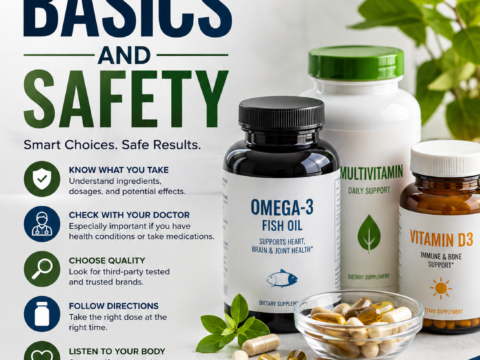
Reading a Supplement Facts label helps you understand what is in a supplement, how much you are taking, and whether the product fits your needs. The label can show the serving size, active ingredients, dose per serving, Percent Daily Value, added ingredients, warnings, and manufacturer details.
Whether you are buying a multivitamin, magnesium supplement, protein powder, greens powder, herbal capsule, probiotic, fish oil, pre-workout, sleep aid, or gummy vitamin, the label is one of the most important tools for making a safer decision.
Quick answer: Start with the serving size, then check every ingredient and its amount per serving. Review the Percent Daily Value when available, look for warnings and other ingredients, and compare the product with every other supplement, fortified food, or drink you use.
What Is a Supplement Facts Label?
A Supplement Facts label is the information panel found on dietary supplements sold in the United States. It is similar in purpose to the Nutrition Facts label found on food, but it is designed for products intended to supplement the diet.
The Supplement Facts panel typically lists:
- Serving size
- Servings per container
- Dietary ingredients
- Amount of each ingredient per serving
- Percent Daily Value when one has been established
- Plant parts or ingredient forms in some products
Outside the Supplement Facts panel, you may also find directions, warnings, other ingredients, allergen information, lot numbers, expiration dates, storage instructions, and manufacturer or distributor details.
Why Reading the Label Matters
The front of a supplement package is marketing. It may use phrases such as “immune support,” “energy,” “natural,” “clinically studied,” “detox,” “advanced,” or “high potency.” Those claims do not tell you the exact dose, whether the product is appropriate for you, or whether it can interact with your medications.
The Supplement Facts panel gives you more useful information. Reading it can help you:
- Understand how much of each ingredient you are taking.
- Identify ingredients that may not fit your needs.
- Compare similar products more accurately.
- Notice overlapping vitamins, minerals, caffeine, herbs, or stimulants.
- Avoid taking more than the labeled serving.
- Check for allergens, sweeteners, gelatin, caffeine, or other additives.
- Review safety warnings before using the product.
- Recognize vague formulations that hide individual ingredient amounts.
How to Read a Supplement Facts Label Step by Step
Use this 10-step process before taking any new vitamin, mineral, herbal product, powder, gummy, capsule, or liquid supplement.
- Check the serving size.
- Review the number of servings in the container.
- Look at the amount of every active ingredient per serving.
- Understand the Percent Daily Value when it is listed.
- Check the form of vitamins, minerals, herbs, and other ingredients.
- Read the “Other Ingredients” section.
- Review directions, warnings, and storage instructions.
- Be cautious with proprietary blends.
- Compare ingredients with everything else you take.
- Check expiration, lot number, brand details, and packaging condition.
Step 1: Check the Serving Size
The serving size tells you what the manufacturer considers one dose. It may be one capsule, two tablets, three gummies, one scoop, two scoops, a packet, a tablespoon, or a liquid measurement.
This is one of the most important parts of the label because all ingredient amounts listed in the Supplement Facts panel are based on that serving size.
Example
Serving Size: 2 Capsules
If the label lists 400 mg of magnesium, that amount applies to two capsules—not one.
If you take only one capsule, you are taking half of the stated amount. If you take four capsules, you are taking twice the stated amount.
Do not assume one pill equals one serving. Always confirm the serving size before comparing products or calculating your intake.
Step 2: Check Servings Per Container
Servings per container tells you how many full servings are in the bottle, tub, pouch, or package. This information can help you estimate how long the product may last and compare the real cost of products with different package sizes.
Example
Serving Size: 2 Gummies
Servings Per Container: 30
The bottle contains 60 gummies and provides 30 daily servings if you take two gummies per day.
A large container does not always mean a product lasts longer. A powder tub may look large but contain only a small number of servings, especially when the serving size requires multiple scoops.
Step 3: Review the Amount Per Serving
The “Amount Per Serving” column tells you how much of each dietary ingredient is provided in one full serving. Amounts may be listed in units such as milligrams (mg), micrograms (mcg), grams (g), international units (IU), colony-forming units (CFU), or another measurement appropriate for the ingredient.
Do not judge a supplement only by its product name. Two products may both be labeled “Magnesium,” “Probiotic,” “Vitamin D,” or “Turmeric,” yet contain different forms, doses, added ingredients, or serving sizes.
Common Measurement Units
| Unit | What It Means | Common Uses on Labels |
|---|---|---|
| g | Gram | Protein, fiber, creatine, amino acids, carbohydrates |
| mg | Milligram; one-thousandth of a gram | Minerals, herbal extracts, caffeine, amino acids |
| mcg | Microgram; one-millionth of a gram | Vitamin D, vitamin B12, folate, vitamin K, selenium |
| IU | International Unit; used for specific vitamins and substances | Vitamin D, vitamin A, vitamin E in some products |
| CFU | Colony-Forming Unit; often used for live microorganisms | Probiotic products |
Pay close attention to units. A microgram is much smaller than a milligram, and a label can look confusing if you do not notice the difference.
Step 4: Understand Percent Daily Value (%DV)
The Percent Daily Value, written as %DV, shows how much a nutrient in one serving contributes to a reference daily amount. It is commonly listed for vitamins and minerals, but it may not appear for every ingredient.
A %DV can help you see whether a serving provides a relatively low or high amount of a nutrient. As a general guide:
- 5% Daily Value or less is generally considered low.
- 20% Daily Value or more is generally considered high.
Example
Vitamin C: 90 mg — 100% Daily Value
This means one serving provides the full reference daily amount used for the label.
A high %DV does not automatically mean a supplement is better. Some nutrients can create risks in excessive amounts, especially when you combine several fortified foods, beverages, multivitamins, powders, and individual supplements.
Also remember that a %DV is a general reference. It is not personalized medical advice and does not account for every person’s age, health condition, medication use, pregnancy status, or nutritional needs.
Step 5: Check the Form of Each Ingredient
The form of an ingredient can matter. Vitamins, minerals, herbs, probiotics, and fatty acids may appear in different forms on a label. The form can affect how a product is used, tolerated, compared, or evaluated.
Vitamin and Mineral Forms
A label may list the source or form of a nutrient in parentheses. For example:
- Magnesium citrate
- Magnesium glycinate
- Calcium carbonate
- Calcium citrate
- Vitamin B12 as cyanocobalamin or methylcobalamin
- Folate as folic acid or methylfolate
- Zinc picolinate or zinc gluconate
The label may also list the amount of the nutrient itself, rather than the total weight of the compound. This is why comparing products requires more than looking at the front of the bottle.
Herbal Ingredients
For herbs and botanicals, look for the plant name, plant part, extraction information, and amount per serving when available.
Examples may include:
- Turmeric root extract
- Ginger root powder
- Peppermint leaf
- Green tea leaf extract
- Milk thistle seed extract
- Ginseng root extract
A concentrated extract may not be equivalent to using the herb as a food, spice, or tea. Herbal products can also interact with medication and may not be appropriate for everyone.
Probiotics
For probiotic products, look beyond the total number of CFUs. A label may list the genus, species, and strain of an organism. Different strains may have different characteristics, so a high number alone does not tell you whether a product fits your goal.
Step 6: Read the “Other Ingredients” Section
The “Other Ingredients” list often appears below or beside the Supplement Facts panel. These are ingredients used to make the supplement into a capsule, tablet, powder, gummy, liquid, or flavored product.
Other ingredients may include:
- Capsule materials, such as gelatin or vegetable cellulose
- Sweeteners or sugar alcohols
- Flavorings
- Colorings
- Binders or fillers
- Coatings
- Preservatives
- Oils
- Allergen-containing ingredients
- Caffeine or stimulant-containing ingredients in some products
Check this section if you have food allergies, sensitivities, dietary preferences, religious restrictions, or a reason to avoid ingredients such as caffeine, artificial sweeteners, gelatin, soy, milk, shellfish, gluten-containing ingredients, or certain dyes.
Step 7: Read Directions, Warnings, and Storage Instructions
Do not skip the directions and warning statements. They can help you understand how the manufacturer recommends using the product and who should avoid it or seek professional guidance first.
Directions May Tell You:
- How much to take
- How often to take it
- Whether to take it with food
- Whether to mix the product with water or another beverage
- Whether it should be taken at a specific time of day
- How long the product should be used
Warnings May Include:
- Do not exceed the recommended serving.
- Keep out of reach of children.
- Not intended for use by children.
- Ask a healthcare professional before use if pregnant or breastfeeding.
- Ask a healthcare professional before use if taking medication.
- Stop use if an adverse reaction occurs.
- Do not use if the safety seal is broken or missing.
- Store in a cool, dry place.
Warnings are not a complete list of every possible risk. If you take prescription medication, have a health condition, are pregnant, are breastfeeding, or are preparing for surgery, speak with a doctor or pharmacist before starting a new supplement.
Step 8: Watch for Proprietary Blends
A proprietary blend is a group of ingredients listed under one blend name with one total amount. The label may show all ingredients in the blend but not reveal how much of each one is included.
Example
Energy Matrix — 1,500 mg
Ingredients: Green tea extract, guarana, ginseng, taurine, caffeine, and other ingredients.
This label tells you the full blend weighs 1,500 mg, but it does not tell you the exact amount of green tea extract, guarana, ginseng, taurine, or caffeine. That makes it harder to assess dose, compare the product with research, avoid stimulant overlap, or identify an ingredient that may be causing side effects.
Whenever possible, choose products that show the exact amount of every active ingredient.
Step 9: Check for Ingredient Overlap
Ingredient overlap is one of the most common supplement safety issues. It happens when you take several products that contain the same vitamin, mineral, herb, stimulant, or other ingredient.
Overlap can occur with combinations such as:
- A multivitamin and an individual vitamin supplement
- A multivitamin and a greens powder
- A pre-workout and an energy drink
- A sleep blend and a separate herbal sleep product
- A protein powder with added vitamins and a meal-replacement shake
- An immune-support gummy and a vitamin C or zinc supplement
- A probiotic blend and another digestive-support product
How to Check for Overlap
- Write down every supplement, powder, gummy, tea, drink, and fortified food you use.
- List the serving size you actually take for each product.
- Write down the amount of each overlapping ingredient.
- Add the totals for vitamins, minerals, caffeine, herbs, and other repeated ingredients.
- Ask a pharmacist, doctor, or registered dietitian for help if you are unsure.
Pay special attention to high-dose vitamins and minerals, caffeine, stimulant blends, and herbal extracts.
Step 10: Check Product and Brand Details
The Supplement Facts label is important, but it is not the only detail to review. Check the overall product packaging and seller before purchasing or using a supplement.
Look for These Details:
- A clearly printed expiration date
- A lot or batch number
- Packaging that is sealed and not damaged
- Storage instructions
- Manufacturer, distributor, or company contact information
- A legitimate business website or customer-service contact
- Transparent product information
- Third-party testing or certification when available
Third-party testing may provide additional confidence that a product has been checked for certain quality measures. It does not guarantee that a supplement will work for your goal or that it is safe for every individual.
Avoid products with missing labels, unclear ingredient amounts, broken seals, no expiration date, no company contact information, or claims that sound too good to be true.
How to Read Labels by Supplement Type
Multivitamins
Check for overlapping vitamins and minerals with other products. A multivitamin may contain many nutrients, so it is easy to accidentally duplicate ingredients with an immune product, greens powder, fortified drink, or individual vitamin supplement.
Vitamin and Mineral Supplements
Check the nutrient amount, the ingredient form, the Percent Daily Value, and whether you are already getting the nutrient from another product. High-dose products require extra care.
Protein Powders
Check the protein amount per serving, serving size, total calories, carbohydrate content, fat content, added vitamins and minerals, sweeteners, allergens, and stimulant ingredients if the product is marketed for performance or energy.
Pre-Workouts and Energy Products
Check caffeine, stimulants, serving size, proprietary blends, and overlap with coffee, energy drinks, fat burners, or other performance products. Be especially cautious with products that hide stimulant amounts inside blends.
Herbal Supplements
Look for the herb name, plant part, extract details, ingredient amount, warnings, and potential interactions with medication. Do not assume a plant-based product is automatically safe.
Probiotics
Check the organisms listed, strain information when available, CFUs per serving, expiration date, storage requirements, and whether the product needs refrigeration.
Greens Powders
Check for added vitamins, minerals, caffeine, herbal ingredients, sweeteners, probiotics, digestive enzymes, and serving size. Greens powders do not replace regular fruit and vegetable intake.
Gummy Supplements
Check the number of gummies per serving, sugar content, added sweeteners, serving directions, and the total vitamin or mineral amount. Gummies can be easy to overconsume because they resemble candy.
Common Mistakes When Reading Supplement Labels
- Looking only at the front of the bottle.
- Assuming one capsule or gummy equals one serving.
- Ignoring the serving size.
- Taking more than the labeled serving without professional guidance.
- Failing to check other ingredients and allergens.
- Assuming a high Percent Daily Value is always better.
- Combining products without checking ingredient overlap.
- Ignoring warnings because a product is “natural.”
- Choosing proprietary blends that hide ingredient amounts.
- Using expired products or products with broken seals.
- Trusting bold marketing claims instead of the facts panel.
- Not telling a doctor or pharmacist about supplements you use.
Top 10 Questions About Supplement Facts Labels
1. What is the most important thing to look at on a Supplement Facts label?
Start with the serving size. Every ingredient amount and Percent Daily Value on the label is based on that serving size, which may include more than one capsule, gummy, tablet, scoop, or packet.
2. What does “Amount Per Serving” mean?
Amount Per Serving tells you how much of each listed dietary ingredient is provided in one full serving. Check the serving size first so you know how many capsules, gummies, scoops, or tablets equal that amount.
3. What does %DV mean on a supplement label?
%DV means Percent Daily Value. It shows how much one serving contributes to a reference daily amount for a nutrient. As a general guide, 5% Daily Value or less is low and 20% Daily Value or more is high.
4. Is a higher %DV always better?
No. A high %DV may be appropriate in some situations, but excessive intake can cause side effects or increase the risk of taking too much when you combine multiple products. More is not always better.
5. What is a proprietary blend?
A proprietary blend is a group of ingredients listed under one total amount without showing the exact dose of every individual ingredient. It can make it harder to evaluate safety, effectiveness, interactions, and ingredient overlap.
6. Should I read the “Other Ingredients” list?
Yes. Other ingredients can include capsule materials, sweeteners, flavorings, colorings, oils, preservatives, allergens, caffeine, and other additives. This section is especially important if you have allergies, sensitivities, or dietary restrictions.
7. How do I know whether two supplements contain the same ingredients?
Compare the Supplement Facts panels line by line. Write down every ingredient and the amount you take from each product, then add overlapping totals. Ask a pharmacist or qualified healthcare professional for help if needed.
8. What should I look for on an herbal supplement label?
Look for the herb name, plant part, extract information, amount per serving, directions, warnings, other ingredients, and possible medication interaction cautions. A concentrated extract may not be equivalent to using the herb in food or tea.
9. Why should I check the expiration date and lot number?
The expiration date helps you avoid using an outdated product. The lot number identifies the manufacturing batch and can be useful if you experience a problem or need to report a product concern.
10. Should I ask a doctor or pharmacist to review a supplement label?
Yes, especially if you take medications, have a health condition, are pregnant or breastfeeding, are preparing for surgery, are considering a high-dose product, or are unsure whether the ingredients may interact with something you already use.
Final Takeaway
Reading a Supplement Facts label is one of the best ways to make a more informed supplement decision. Start with serving size, identify every active ingredient and its amount, understand the Percent Daily Value, check other ingredients and warnings, avoid hidden proprietary blends, and watch for overlap across everything you take.
If a label is unclear, the dose seems excessive, the product makes dramatic claims, or you take medication or have a medical condition, pause and ask a pharmacist, doctor, or registered dietitian before starting it.