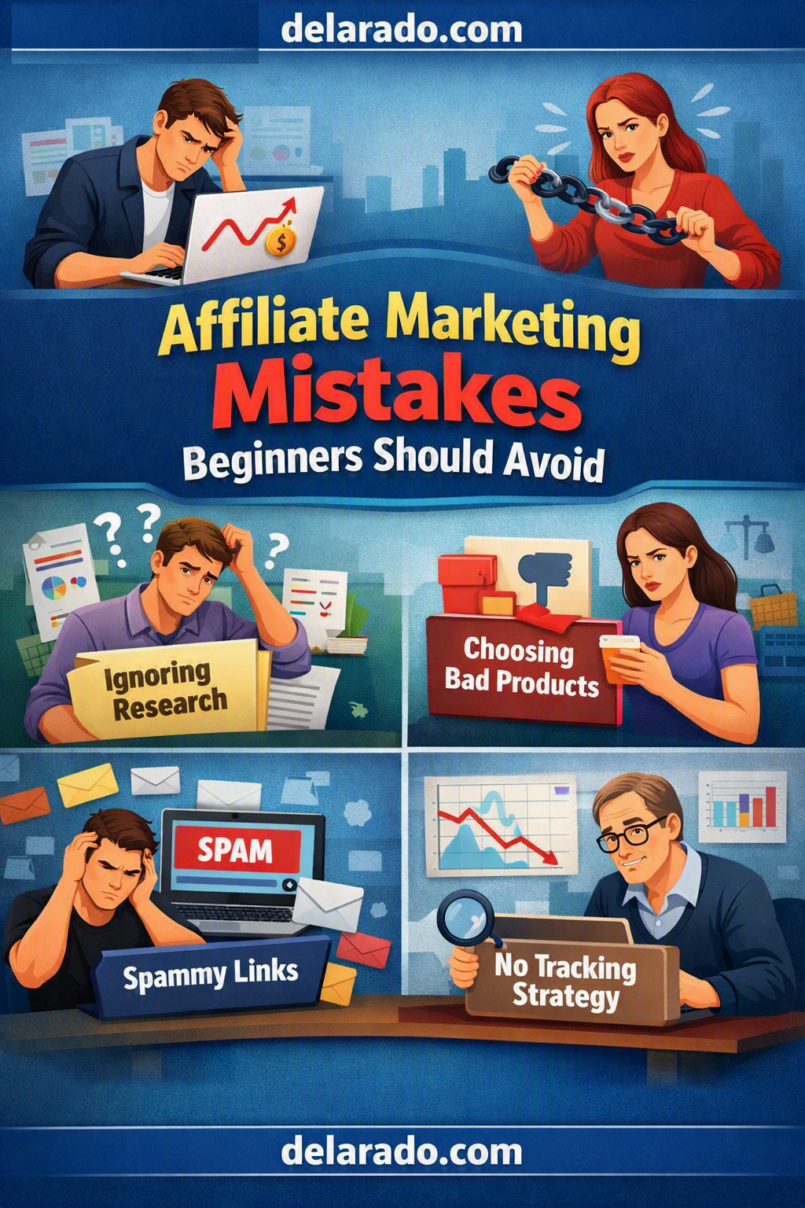
Affiliate marketing beginners often fail because they focus on links and commissions before audience trust, helpful content, product fit, disclosure, and long-term value. The best way to avoid common mistakes is to treat affiliate marketing as a content and audience business—not as a shortcut to automatic income.
Start with a focused niche, create useful resources, recommend products honestly, disclose relationships clearly, follow program rules, and update content over time. A smaller audience that trusts your recommendations is more valuable than a large audience that feels pressured or misled.
Who Is This Topic For?
This guide is for new affiliate marketers, bloggers, YouTubers, social-media creators, newsletter writers, niche website owners, freelancers, course creators, consultants, and anyone beginning to use affiliate links.
This Article Is Helpful If You Want To:
- Avoid common affiliate marketing mistakes
- Build audience trust
- Choose better affiliate programs
- Create useful affiliate content
- Write clear disclosures
- Promote products responsibly
- Build traffic ethically
- Create reviews and comparisons
- Build an email list
- Create a long-term affiliate strategy
Why Beginners Make Affiliate Marketing Mistakes
Affiliate marketing is often presented as an easy way to make money online. This can lead beginners to focus on high commissions, quick traffic, product links, social-media posts, and short-term results instead of building useful content and audience trust.
Common Beginner Assumptions
- I only need to post links to make commissions
- The highest commission product is always the best choice
- More affiliate links will lead to more sales
- I can copy product descriptions or competitor reviews
- I do not need to disclose affiliate links
- I can recommend a product without understanding it
- I can buy traffic or followers to grow quickly
- I should create content about every profitable topic
- One viral post will create a stable business
- Affiliate marketing creates guaranteed income
These assumptions usually lead to weak content, poor audience fit, low trust, account problems, and unstable results.
Benefits of Avoiding These Mistakes
Builds Trust
Transparent, useful, accurate recommendations can help readers and viewers trust your content over time.
Creates Better Content
When you focus on solving audience problems, your articles, videos, emails, comparisons, reviews, and resource pages become more useful.
Reduces Account Risk
Following affiliate program rules, platform policies, disclosure requirements, and advertising guidelines can reduce the chance of account suspension or lost commissions.
Improves Product Fit
Choosing products based on audience needs can lead to more relevant recommendations and fewer disappointed buyers.
Supports Long-Term Growth
Helpful content, email list building, search visibility, video libraries, and audience relationships can become long-term assets.
Helps You Learn Faster
When you track content, questions, clicks, and audience feedback, you can improve your strategy based on real information instead of chasing hype.
Risks of Making Affiliate Mistakes
Loss of Audience Trust
Readers may stop trusting you if recommendations feel misleading, overly promotional, irrelevant, or hidden behind unclear disclosures.
Low-Quality Traffic
Spam, bought followers, misleading ads, copied content, and irrelevant social posts may create numbers without bringing people who genuinely need your content.
Rejected Affiliate Applications
Programs may reject or suspend affiliates who use prohibited promotion methods, misleading claims, spam, trademark misuse, or other rule violations.
Lost Commissions
Commissions can be reversed when customers refund, cancel, dispute charges, use ineligible coupons, or when an affiliate violates program rules.
Wasted Time
Creating thin content, promoting unsuitable products, chasing every platform, or joining too many programs can waste time that could be spent helping a focused audience.
Potential Legal or Platform Problems
Hidden disclosures, deceptive claims, fake reviews, misleading testimonials, privacy mistakes, and prohibited advertising methods can create compliance or platform issues.
Mistake 1: Choosing a Niche Only for High Commissions
A high commission rate does not make a niche or product a good fit. If you do not understand the topic, cannot create useful content, or do not care about the audience, it will be difficult to build trust.
Weak Approach
I will promote whatever pays the highest commission.
Better Approach
I will choose a focused audience, identify their recurring problems, and recommend relevant products only when they help solve those problems.
Questions to Ask
- Can I create useful content in this topic for a year?
- Do people have real questions about this niche?
- Are there legitimate products or services available?
- Can I explain the products responsibly?
- Would I recommend the product without a commission?
Choose a niche based on audience value, content depth, product fit, and your ability to create helpful resources consistently.
Mistake 2: Choosing a Niche That Is Too Broad
Broad niches make it difficult to build a clear audience, create consistent content, and make relevant recommendations.
Broad Topics
- Technology
- Business
- Fitness
- Travel
- Home products
- Marketing
More Focused Niches
- WordPress tools for beginner website owners
- Productivity tools for solo freelancers
- Home workout equipment for beginners in small spaces
- Travel photography gear for new creators
- Apartment organization tools for renters
- Email marketing tools for small local businesses
A focused niche makes it easier to understand the audience, plan content, build trust, and recommend products responsibly.
Mistake 3: Promoting Products You Do Not Understand
Do not promote a product simply because an affiliate program accepts you. You should understand what the product does, who it is for, what it costs, what limitations it has, and what alternatives exist.
Before Recommending a Product, Review:
- Product purpose
- Target audience
- Core features
- Pricing structure
- Refund or cancellation terms
- Support options
- Product limitations
- Competitor alternatives
- Affiliate program rules
- Potential risks for customers
Honest Research-Based Statement
I have not personally used this product. This overview is based on published product information, documentation, and pricing details. Review current information directly before deciding whether it fits your needs.
Do not imply personal use, testing, success, or results if you have not experienced them.
Mistake 4: Writing Fake Reviews
A fake review is content that falsely claims personal use, testing, customer results, product success, ratings, screenshots, or endorsements.
Examples of Fake Review Practices
- Claiming you used a product you never used
- Creating fake screenshots
- Inventing customer stories
- Using AI-generated testimonials as real reviews
- Using stock people as fake customers
- Creating false ratings
- Fabricating earnings screenshots
- Creating fake before-and-after results
- Claiming a product produced guaranteed results
Better Alternatives
- Create a research-based buyer guide
- Use clear disclosure about your experience level
- Test products before writing a firsthand review
- Use official product information carefully
- Explain decision factors instead of pretending to test everything
- Include honest limitations and alternatives
Trust is difficult to earn and easy to lose. Do not sacrifice it for a short-term commission.
Mistake 5: Hiding Affiliate Disclosures
People should know when you may earn a commission from a recommendation. A disclosure should be clear, readable, and placed before or near the affiliate link.
Clear Disclosure Example
Disclosure: This article contains affiliate links. If you purchase through a qualifying link, I may earn a commission at no additional cost to you.
Where to Place Disclosure
- Near the beginning of an article
- Before affiliate links
- Near product recommendations
- At the top of a YouTube description
- In social captions or on-screen text
- In affiliate emails
- On resource and comparison pages
Disclosure Mistakes to Avoid
- Hiding it in the footer
- Using vague language such as “may contain links”
- Using tiny text
- Using low-contrast text
- Placing disclosure after the affiliate link
- Using only a separate legal page
- Forgetting disclosure in video descriptions or emails
A disclosure does not make an unsuitable recommendation acceptable, but it helps people understand your financial relationship.
Mistake 6: Creating Thin Content
Thin affiliate content provides little value beyond product links. It may repeat merchant marketing language, copy competitors, use generic AI text, or list products without explaining differences.
Thin Content Often:
- Has little original explanation
- Uses copied product descriptions
- Lists products with no context
- Does not explain who the product is for
- Does not explain limitations
- Uses excessive affiliate links
- Does not include alternatives
- Provides no useful examples
- Is not updated
Helpful Content Usually:
- Answers a real question
- Explains decision factors
- Uses clear examples
- Includes benefits and limitations
- Includes alternatives when useful
- Uses original organization and analysis
- Includes clear disclosures
- Provides a useful next step
Example
Thin: “This hosting plan is the best. Click here to buy it.”
Helpful: “Before choosing hosting, compare support, backups, renewal pricing, website growth needs, and ease of use. This plan may fit beginners who want simple setup, but it may not suit websites needing advanced server controls.”
Mistake 7: Using Too Many Affiliate Links
Adding many links does not necessarily increase trust or conversions. Excessive links can make an article, video description, email, or social post feel promotional and difficult to read.
Better Link Placement
- After explaining product fit
- Inside a useful comparison table
- Near a product summary
- After a tutorial step where the product is relevant
- In a clearly labeled resource section
- At the end of a buyer guide
- In a YouTube description after disclosure
Questions to Ask Before Adding a Link
- Does this product help solve the problem discussed?
- Would the audience expect this link here?
- Can I explain product fit and limitations?
- Would I include this product if no commission existed?
- Does the affiliate program allow this placement?
Use fewer, more relevant links instead of filling every paragraph with affiliate offers.
Mistake 8: Making Unsupported Claims
Do not make claims that you cannot support. Product marketing language may be exaggerated, but repeating it does not make it accurate.
Claims to Avoid
- Guaranteed income
- Guaranteed sales
- Guaranteed website traffic
- Guaranteed search rankings
- Guaranteed health outcomes
- Guaranteed financial results
- Guaranteed product performance
- Automatic success
- Risk-free results
- Results that everyone will achieve
More Accurate Language
- This product may be useful for…
- This tool includes features for…
- This option may suit beginners who need…
- Consider comparing this platform if you want…
- This may not fit users who need…
- My experience was based on…
- Results can vary depending on…
- Review current details directly before purchasing…
Example
Misleading: “This SEO tool guarantees first-page rankings.”
More accurate: “This SEO tool can help research keywords, review website data, and identify optimization opportunities. Search performance depends on many factors, including content quality, competition, website setup, and user needs.”
Mistake 9: Ignoring Product Limitations
Every product has limitations. Failing to mention them can make your recommendation feel incomplete or misleading.
Limitations to Consider
- Price or renewal cost
- Free plan limits
- Learning curve
- Limited support
- Limited integrations
- Device compatibility
- Regional availability
- Subscription requirements
- Feature limits
- Not suitable for beginners
- Not suitable for advanced users
- Not suitable for certain business types
Example
This video editor may be useful for creators who want quick captions and short-form editing. It may not fit professional editors who need advanced color correction, detailed audio workflows, or complex multi-camera timelines.
Limitations help readers choose the right product and make your content more credible.
Mistake 10: Not Including Alternatives
Not every audience member needs the same product. Including alternatives shows that your goal is to help people choose, not force everyone toward one affiliate link.
Reasons to Include Alternatives
- Different budgets
- Different technical skill levels
- Different business sizes
- Different feature needs
- Different support requirements
- Different locations or currencies
- Different device requirements
- Different privacy or security needs
Example
This email platform may fit a small business that needs simple forms and newsletters. If you need detailed CRM workflows, advanced lead scoring, or enterprise reporting, compare it with more advanced marketing platforms.
Alternatives do not weaken a recommendation. They make it more useful and trustworthy.
Mistake 11: Ignoring Affiliate Program Rules
Affiliate programs may have rules about where and how you promote links. Ignoring these rules can lead to rejected applications, lost commissions, or account termination.
Common Program Restrictions
- Restrictions on paid advertising
- Restrictions on bidding on brand names
- Restrictions on email marketing
- Restrictions on direct linking
- Restrictions on coupon promotion
- Restrictions on social-media promotion
- Restrictions on link shortening or cloaking
- Restrictions on product screenshots
- Restrictions on discounts or incentives
- Restrictions on certain countries
- Restrictions on certain claims
Before Promoting a Program, Check:
- Allowed traffic sources
- Required disclosures
- Commission terms
- Cookie duration
- Payout threshold
- Payment schedule
- Refund and reversal rules
- Trademark rules
- Coupon rules
- Termination conditions
Do not assume all affiliate programs have the same rules.
Mistake 12: Buying Traffic, Followers, or Email Lists
Buying low-quality traffic, fake followers, fake engagement, or email lists may create numbers without building a real audience. It can also create privacy, deliverability, platform, and trust problems.
Problems With Purchased Followers
- Low engagement
- Fake accounts
- Reduced audience trust
- Poor analytics
- Potential platform violations
- No meaningful product interest
Problems With Purchased Email Lists
- Lack of permission
- Low engagement
- Spam complaints
- Deliverability problems
- Privacy concerns
- Possible platform account problems
- Damage to your reputation
Better Alternatives
- Create useful content
- Offer a relevant lead magnet
- Build an email list through opt-ins
- Create search-focused articles
- Publish helpful YouTube videos
- Use social media to teach useful tips
- Participate in communities appropriately
- Build partnerships and referrals naturally
Mistake 13: Spamming Communities and Comments
Posting affiliate links in unrelated comments, forums, communities, groups, and direct messages is unlikely to build trust and may violate community or program rules.
Spam Examples
- Posting the same affiliate link under unrelated videos
- Adding links to every forum answer
- Sending unsolicited direct messages
- Posting promotional comments without answering the question
- Using fake accounts to promote a product
- Hiding affiliate relationships
- Ignoring group rules
Helpful Community Approach
- Answer questions directly
- Share useful experience
- Follow community rules
- Link only when your resource directly answers the question
- Disclose affiliate relationships when relevant
- Participate consistently
- Use questions to create future content
Community participation should be about helping people, not dropping links.
Mistake 14: Ignoring Email List Building
Social reach, search traffic, and platform algorithms can change. An email list can help you stay connected with people who want more useful information.
Lead Magnet Ideas
- Buyer comparison checklist
- Website launch checklist
- Product selection worksheet
- Tool comparison template
- Beginner setup guide
- Resource library
- Mini email course
- Content planning worksheet
Example Funnel
Helpful article → Free buyer checklist → Educational email sequence → Product comparison guide → Relevant affiliate recommendation with disclosure
Build your email list through genuine opt-ins. Tell subscribers what they will receive, provide useful content, disclose affiliate links clearly, and include appropriate unsubscribe options.
Mistake 15: Not Updating Old Content
Affiliate content can become misleading when product prices, features, policies, availability, links, and program terms change.
Update Checklist
- Check product pricing
- Check feature lists
- Check affiliate links
- Check product availability
- Check free trial details
- Check refund and cancellation policies
- Update screenshots
- Review alternatives
- Check affiliate program terms
- Review disclosure placement
- Remove products you no longer recommend
Example Update Note
Last reviewed: [Month and Year]. Product features, pricing, and affiliate terms can change. Review current details directly before purchasing.
Updating older content can be more valuable than publishing many new low-quality articles or videos.
Mistake 16: Trying to Be Everywhere at Once
Beginners often create accounts on every social platform, start a website, launch a YouTube channel, create a podcast, send emails, and try paid ads all at once. This can lead to burnout and inconsistent content.
Better Beginner Approach
- Choose one niche
- Choose one main content platform
- Create useful content consistently
- Build a basic email list
- Add one secondary platform for repurposing
- Track what works
- Expand slowly when your process is stable
Example
Start with a WordPress website and one weekly article. Turn each article into one YouTube video or short-form video, then promote a free checklist to build an email list.
Consistency on one or two channels is often better than weak activity on many channels.
Mistake 17: Relying Too Much on AI Without Review
AI can help brainstorm ideas, organize outlines, summarize notes, create checklists, and improve drafts. It should not replace fact-checking, original experience, product research, disclosure, or human judgment.
Useful AI Tasks
- Brainstorming content ideas
- Creating article outlines
- Organizing audience questions
- Creating checklist drafts
- Repurposing approved content
- Drafting social post variations
- Creating content calendars
Tasks That Need Human Review
- Product features
- Current pricing
- Affiliate program terms
- Legal or financial claims
- Health and safety claims
- Product comparisons
- Personal experience statements
- Affiliate disclosures
- Customer testimonials
- Final publishing decisions
Do not publish generic AI content that copies common claims, invents product details, makes unsupported recommendations, or implies firsthand experience.
Mistake 18: Measuring Only Commissions
Commission earnings are important, but they do not show the full quality of your affiliate strategy.
Other Metrics to Review
- Website traffic
- Video views
- Audience retention
- Email signups
- Email engagement
- Affiliate link clicks
- Conversion rates where available
- Refund and reversal patterns
- Customer questions
- Comments and replies
- Content update needs
- Audience trust and satisfaction
Questions to Ask
- Does this content answer a real question?
- Are readers engaging with it?
- Do people ask useful follow-up questions?
- Do the products fit the audience?
- Are refunds or reversals high?
- Do readers return for more content?
- Is the recommendation still current?
A smaller audience that trusts your recommendations can be more valuable than a larger audience that does not engage or feels pressured.
Step-by-Step: Build a Better Affiliate Foundation
Step 1: Choose a Focused Niche
Choose a topic and audience where you can provide useful content consistently.
Step 2: Identify Audience Questions
Use search queries, comments, customer questions, reviews, communities, and support issues to identify real problems people need help solving.
Step 3: Create Helpful Content
Create guides, tutorials, comparisons, buyer checklists, reviews, resource pages, and frequently asked questions that give real value.
Step 4: Research Products Carefully
Understand product features, pricing, limitations, support, alternatives, refund policies, and affiliate program terms before recommending anything.
Step 5: Join a Small Number of Relevant Programs
Start with a few products that fit your niche. Do not join every program available.
Step 6: Add Clear Disclosures
Tell people when you may earn a commission. Place disclosure near recommendations and affiliate links.
Step 7: Build an Email List
Offer a useful lead magnet and send relevant educational content to people who choose to subscribe.
Step 8: Track and Update
Review traffic, engagement, clicks, questions, conversions, refunds, reversals, and product changes. Update content regularly.
Affiliate Marketing Beginner Checklist
Before You Start
- Choose a focused niche
- Define your audience
- List audience problems
- Choose a main content platform
- Create a simple content plan
- Research products and programs
Before You Promote a Product
- Understand what the product does
- Understand who it is for
- Understand its limitations
- Check current pricing
- Review refund and cancellation policies
- Read the affiliate agreement
- Check allowed promotion methods
- Write a clear disclosure
- Create useful content around the audience problem
Before You Publish
- Fact-check product details
- Check affiliate links
- Check disclosure placement
- Check titles and claims
- Check images and screenshots
- Check mobile formatting
- Check alternatives and limitations
- Check grammar and readability
- Check whether the content helps without the link
After You Publish
- Monitor questions and comments
- Check affiliate link performance
- Review product changes
- Update old content
- Remove products you no longer recommend
- Track email signups and engagement
- Review refund or reversal patterns where available
Programs That Can Help
Affiliate Program Dashboards
Affiliate dashboards can provide approved links, product information, commission data, promotional rules, reporting, payout details, and program updates.
Affiliate Networks
Affiliate networks can help connect affiliates with brands and may provide tracking, reporting, payments, applications, and link tools. Examples include Impact, CJ, ShareASale, Awin, Rakuten Advertising, and PartnerStack.
WordPress
WordPress can help create reviews, comparisons, tutorials, buyer guides, resource libraries, disclosure pages, lead magnet pages, and affiliate content categories.
Google Search Console
Google Search Console can help identify search queries, content opportunities, pages that need updates, and audience questions.
Google Analytics
Google Analytics can help measure traffic, engagement, traffic sources, outbound-link activity, email signups, and visitor behavior when configured appropriately.
Canva
Canva can help create buyer checklists, product comparison graphics, lead magnets, social posts, video thumbnails, resource guides, and visual affiliate content.
YouTube Studio
YouTube Studio can help publish tutorials and reviews, add captions, manage descriptions, review analytics, and understand audience behavior.
Email Marketing Tools
MailerLite, ConvertKit, Brevo, Mailchimp, and similar platforms can help create signup forms, deliver lead magnets, send newsletters, build educational sequences, and manage subscriber preferences.
Link Management Tools
Link management tools can help organize affiliate links, identify broken links, update destinations, and keep records of where links appear. Use only methods permitted by your affiliate programs.
Frequently Asked Questions
What is the biggest affiliate marketing mistake beginners make?
One of the biggest mistakes is focusing on commissions and links before audience trust and helpful content. Start with real audience problems, create useful content, and recommend products only when they fit.
Do I need to disclose affiliate links?
Yes. If you may earn a commission, disclose the relationship clearly near the recommendation or affiliate link.
Can I promote products I have not used?
You can create research-based content, but do not claim personal experience or testing if you have not used the product. Be transparent about the basis of your recommendation.
How many affiliate programs should a beginner join?
Start with a small number of relevant programs, often two to five, that fit your niche and audience. Add more only when you can create useful content and maintain accurate recommendations.
Can I use AI for affiliate marketing content?
AI can help brainstorm topics, organize outlines, and create draft content. You should still verify facts, add original analysis, review product details, avoid fake reviews, disclose affiliate links, and never imply personal experience you do not have.
Should I buy followers or traffic for affiliate marketing?
No. Purchased followers, low-quality traffic, and bought email lists can create poor engagement, trust problems, spam complaints, privacy concerns, and potential platform issues. Build an audience through useful content and genuine opt-ins.
Why am I getting clicks but no commissions?
Possible reasons include poor product fit, audience not being ready to buy, price concerns, tracking limitations, cookie expiration, refunds, program eligibility rules, competitor offers, weak merchant checkout, or mismatched content intent.
How often should I update affiliate content?
Review important pages regularly, especially comparison articles, reviews, buyer guides, pricing pages, product tutorials, and resource lists. Update whenever products, prices, links, features, or program terms change.
Can I use affiliate links in email?
Possibly, if the affiliate program allows email promotion and subscribers agreed to receive your messages. Use clear disclosures, relevant content, accurate subject lines, and appropriate unsubscribe options.
What should I avoid in affiliate marketing?
Avoid fake reviews, hidden disclosures, copied content, unsupported claims, irrelevant links, spam, bought email lists, fake followers, misleading urgency, prohibited promotion methods, and products that do not fit your audience.