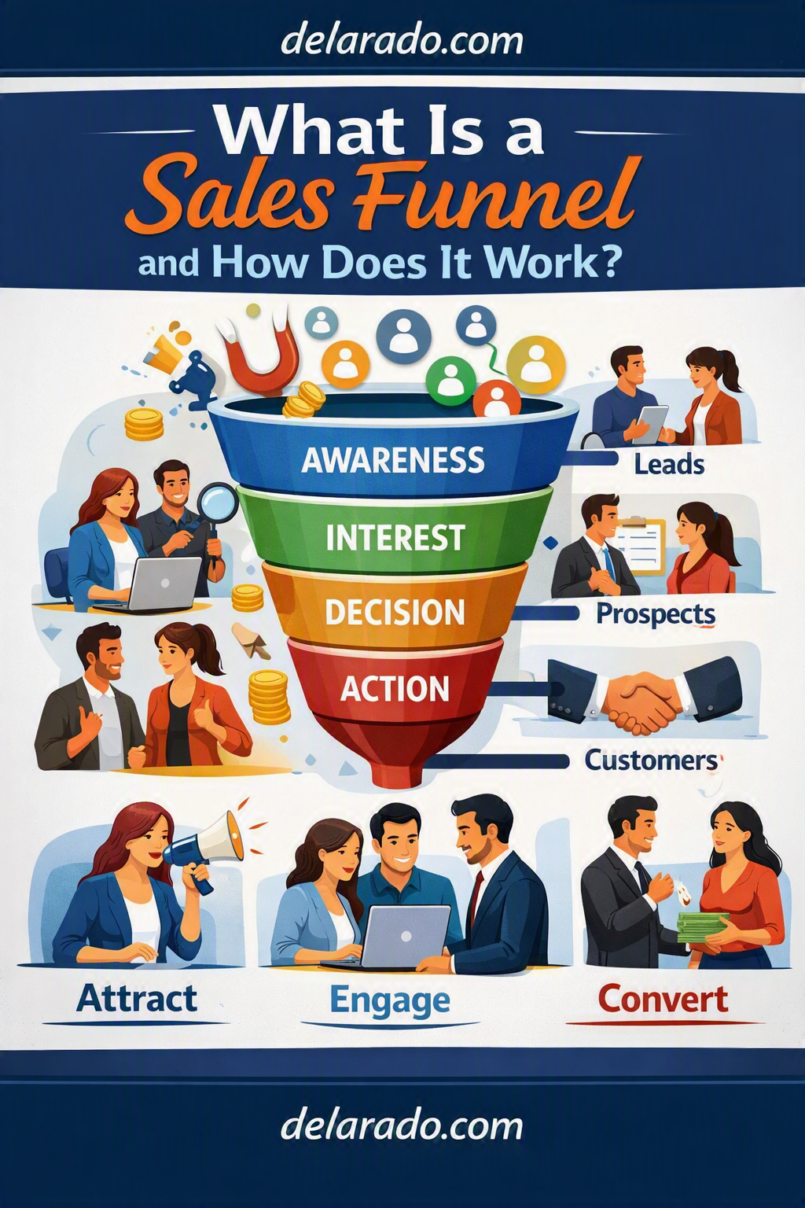
A sales funnel is the series of steps a potential customer takes from first discovering your business to taking an action such as joining your email list, requesting a quote, booking a consultation, starting a trial, or making a purchase. It helps you understand the customer journey and create helpful next steps instead of expecting a visitor to immediately buy.
A useful funnel is not a pressure system. It is a structured way to help the right person understand a problem, explore suitable solutions, make an informed decision, and receive support after becoming a customer. A common customer-journey model includes awareness, consideration, conversion, retention or loyalty, and advocacy.
Who Is This Topic For?
This article is for bloggers, affiliate marketers, small-business owners, local businesses, eCommerce stores, freelancers, consultants, agencies, coaches, course creators, service providers, and anyone who wants a clearer path from content or website visits to meaningful customer actions.
This Article Is Helpful If You Want To:
- Understand what a sales funnel is
- Generate more qualified leads
- Grow an email list
- Get more consultation bookings
- Sell products or services online
- Create a lead magnet
- Improve a service or product page
- Plan a customer follow-up process
- Understand why visitors leave before converting
- Improve customer onboarding
A Sales Funnel Can Be Useful For:
- A local business that wants more appointment requests
- A freelancer who wants better-qualified project inquiries
- An online store that wants more completed purchases
- A blogger growing an email list
- An affiliate website helping readers compare products
- A coach selling a workshop or course
- An agency offering managed services
- A software business encouraging demo requests or free trials
What Is a Sales Funnel?
A sales funnel is a model of the customer journey. It shows how someone moves from first becoming aware of a business or problem to becoming a customer, and ideally to becoming a satisfied repeat customer or advocate.
It is called a “funnel” because not every person who sees your content will take the next step. Many people may see a social post, visit a blog article, or watch a video. Fewer may download a guide, subscribe to emails, request a quote, or purchase. That is normal.
The goal is not to force everyone through the funnel. The goal is to remove unnecessary confusion for people who are genuinely interested in solving the problem your business can help with.
Simple Example
A person searches for “how to choose WordPress hosting.”
They read a helpful article on your website.
They download your free Website Launch Checklist.
They receive a short email series with beginner website tips.
They later use a relevant link to compare hosting options or book a website consultation.
That sequence is a simple sales funnel. The visitor receives useful information at each step, while the business has a clear way to continue the relationship.
How Does a Sales Funnel Work?
A sales funnel works by matching the customer’s current question with a useful next step. Someone who has just discovered a problem needs different information from someone who is ready to buy.
| Funnel Stage | What the Person Is Thinking | Useful Content or Action |
|---|---|---|
| Awareness | “I have a problem or want to learn about this topic.” | Blog posts, videos, social posts, beginner guides, educational resources |
| Consideration | “What are my options, and what might work for me?” | Checklists, comparisons, webinars, FAQs, product guides, email sequences |
| Conversion | “Should I buy, book, request a quote, or start a trial?” | Service pages, product pages, consultation forms, demos, transparent pricing, real testimonials |
| Retention or loyalty | “How do I use this successfully, and should I return?” | Onboarding, support, tutorials, customer emails, renewal reminders, helpful resources |
| Advocacy | “Would I recommend this business to someone else?” | Strong customer service, referral programs, feedback requests, shareable resources |
HubSpot’s customer-journey model identifies awareness, consideration, conversion, retention or loyalty, and advocacy as key stages.
The Funnel Stages
Awareness: Discovering a Problem
The awareness stage begins when someone identifies a problem, question, need, or goal. They may not know your business yet, and they may not be ready to buy anything.
Awareness-Stage Examples
- “Why is my website not getting leads?”
- “What is the difference between a domain and hosting?”
- “How do I start an email list?”
- “How do I create social-media videos?”
- “What should a small-business website include?”
- “How do I choose a project-management tool?”
Useful Awareness Content
- How-to articles
- Beginner videos
- Frequently asked questions
- Social-media tips
- YouTube tutorials
- Glossaries
- Educational checklists
- Simple diagrams
At this stage, focus on helping. Do not immediately push an expensive offer before the visitor understands the basics or trusts the information.
Consideration: Evaluating Options
In the consideration stage, a person understands their problem and begins exploring possible solutions. They may compare tools, services, approaches, prices, features, or providers.
Consideration-Stage Questions
- “What should I compare before choosing web hosting?”
- “Should I build my website myself or hire a designer?”
- “Which email platform fits a small business?”
- “What is included in a website design package?”
- “How much time will this take?”
- “What are the risks of choosing the cheapest option?”
Useful Consideration Content
- Comparison guides
- Buyer checklists
- Case studies with permission
- Product demonstrations
- Webinars
- Tool comparison tables
- FAQ pages
- Email education sequences
A useful consideration-stage resource should explain the differences honestly. Include limitations and trade-offs instead of presenting every product or service as the perfect fit for everyone.
Conversion: Taking Action
The conversion stage is where a person decides whether to make a purchase, request a quote, start a trial, book a consultation, register for a course, or take another business-related action.
Conversion-Stage Questions
- “Is this product right for me?”
- “What does the service include?”
- “How much does it cost?”
- “How long will the process take?”
- “What happens after I buy?”
- “Can I contact someone with a question?”
- “What is the return, cancellation, or refund policy?”
Useful Conversion Assets
- Product pages
- Service pages
- Pricing pages or pricing guidance
- Booking pages
- Quote request forms
- Free-trial pages
- Demo request forms
- Transparent frequently asked questions
- Real approved customer testimonials
- Checkout pages
The conversion stage should make the decision easier, not more pressured. Explain what is included, what is not included, the next steps, important limitations, support options, and applicable terms.
Retention and Loyalty
A sale is not the end of the funnel. Retention and loyalty focus on helping customers use the product or service successfully after purchase.
Useful Retention Activities
- Welcome emails
- Order confirmations
- Onboarding checklists
- Account setup guides
- Product tutorials
- Customer support resources
- Renewal reminders
- Helpful product updates
- Feedback surveys
- Customer education emails
Example
A website-design client books a project. Instead of receiving only an invoice, they receive a welcome email, a project timeline, a content-submission checklist, contact details, and guidance on what happens before the first design review.
Clear onboarding can reduce confusion, improve customer satisfaction, and make it easier for customers to receive the value they expected.
Advocacy: Earning Recommendations
Advocacy happens when a satisfied customer voluntarily recommends your product or service. You cannot manufacture genuine advocacy with fake reviews, purchased testimonials, or deceptive social proof.
Ways to Support Advocacy
- Deliver the promised value
- Provide reliable customer support
- Make onboarding clear
- Ask for feedback at an appropriate time
- Request a review only from real customers
- Make referral programs transparent
- Share customer stories only with permission
- Respond professionally to concerns
Do not create fake customer reviews or AI-generated testimonials. Customer endorsements should reflect real experiences, and material relationships should be disclosed clearly when relevant. The FTC says a connection between an endorser and a marketer that would affect how consumers evaluate an endorsement should be disclosed clearly and conspicuously.
Why Businesses Use Funnels
They Create More Relevant Next Steps
A blog visitor may need a checklist. A returning subscriber may need a comparison guide. A person viewing a service page may need pricing information or a booking link. Funnels help connect each person with the next useful resource.
They Help Organize Content
A funnel gives your content a role. Awareness content attracts and educates. Consideration content helps people evaluate options. Conversion content helps someone make an informed decision. Retention content helps customers succeed.
They Can Improve Lead Quality
A clear lead magnet, application form, consultation booking page, or product quiz can help identify people who have a relevant problem and want more help.
They Help Find Friction
Funnel tracking can show where people leave. For example, visitors may read a landing page but avoid a long form, or add a product to a cart but leave during checkout.
Google Analytics custom funnel reports are designed to show the steps users take toward completing a task and evaluate where users drop off between those steps.
They Support Better Customer Experiences
When you anticipate common questions and provide useful answers at the right time, people can move through the process with less uncertainty and fewer unnecessary barriers.
Benefits of a Sales Funnel
Clearer Marketing Decisions
Instead of posting random content, you can create resources connected to specific customer questions and business goals.
More Useful Content
A funnel encourages you to create content for people at different stages, from beginner education to product comparisons and customer onboarding.
More Organized Follow-Up
Email sequences, booking reminders, resource delivery, customer onboarding, and product education can become more consistent.
Better Measurement
You can measure actions such as downloads, signups, quote requests, bookings, purchases, and repeat orders rather than relying only on page views or social-media likes.
Better Customer Qualification
Relevant forms and resources can help you understand what a lead needs before scheduling a sales conversation or making an offer.
Improved Customer Retention
Helpful post-purchase emails, tutorials, and support resources can help customers use what they bought and reduce confusion after conversion.
Risks and Limitations
A Funnel Cannot Fix a Poor Offer
A polished landing page cannot make an unsuitable product, unclear service, misleading promise, weak support system, or poor customer experience successful over the long term.
Too Many Steps Create Friction
Long forms, complicated checkouts, too many popups, unclear instructions, forced account creation, and repeated confirmation pages can discourage people from taking the next step.
Pressure Tactics Can Harm Trust
Do not use false scarcity, fake countdown timers, misleading “limited spots” messages, hidden fees, bait-and-switch pricing, fabricated reviews, or exaggerated claims to force a decision.
Privacy and Consent Matter
Only collect information you need. Be clear about what someone receives after signing up, protect personal information, and provide appropriate unsubscribe options for marketing messages.
Automation Can Make Mistakes
Automated emails, chatbots, lead scoring, appointment reminders, and customer messages should be reviewed regularly for outdated details, broken links, incorrect pricing, and confusing language.
Not Every Visitor Is Ready
Some visitors are only researching. Give them useful educational resources rather than treating every visit as an immediate opportunity to sell.
Metrics Need Context
A conversion rate does not tell the whole story. Review lead quality, refunds, cancellations, customer complaints, satisfaction, retention, and support needs alongside funnel numbers.
Simple Sales Funnel Examples
Local Service Business
| Stage | Example |
|---|---|
| Awareness | Article: “How to Prepare for a Home Service Appointment” |
| Consideration | Checklist: “Questions to Ask Before Hiring a Service Provider” |
| Conversion | Quote-request page with service area, process, and contact form |
| Retention | Appointment reminder and post-service care guide |
Affiliate Website
| Stage | Example |
|---|---|
| Awareness | Guide: “What Is Web Hosting?” |
| Consideration | Comparison: “What to Compare Before Choosing Hosting” |
| Conversion | Relevant product recommendation with clear affiliate disclosure |
| Retention | Helpful setup emails, tutorials, and updated resources |
Course Creator
| Stage | Example |
|---|---|
| Awareness | Video: “Three Common Beginner Mistakes” |
| Consideration | Free worksheet or live introductory training |
| Conversion | Course page with curriculum, pricing, requirements, and FAQs |
| Retention | Welcome sequence, lesson reminders, student support, and progress resources |
Basic Funnel Metrics
Funnel metrics help you understand whether people take the intended next step. Do not use numbers only to chase volume; use them to identify obstacles and improve the customer experience.
Useful Metrics
- Landing page visits
- Call-to-action clicks
- Lead magnet downloads
- Form completion rate
- Email open and click activity
- Consultation bookings
- Product-page views
- Add-to-cart rate
- Checkout completion rate
- Purchase rate
- Customer retention rate
- Refunds, cancellations, and support requests
Simple Conversion Formula
\[
\text{Conversion Rate} = \frac{\text{People Who Completed an Action}}{\text{People Who Had the Opportunity to Act}} \times 100
\]
Example
If 400 people visit a landing page and 20 download a checklist, the landing-page conversion rate is:
\[
\frac{20}{400} \times 100 = 5\%
\]
Do not assume 5% is good or bad without context. Compare performance over time, test one change at a time, and consider whether the 20 signups are people your business can genuinely help.
Programs That Can Help
WordPress
WordPress can help create blog articles, landing pages, service pages, lead-magnet pages, product pages, resource libraries, and customer education content.
WooCommerce
WooCommerce can help WordPress websites sell products, manage checkout flows, collect order information, issue order confirmations, and support eCommerce funnel tracking when configured properly.
MailerLite, ConvertKit, or Brevo
Email platforms can help deliver lead magnets, manage subscriber lists, send welcome emails, build follow-up sequences, segment subscribers, and provide unsubscribe tools.
HubSpot
HubSpot can support landing pages, forms, email marketing, customer relationship management, pipeline tracking, sales follow-up, and reporting for businesses with more complex lead-management needs.
Google Analytics
Google Analytics can help track key funnel actions and identify where users drop off. Its custom funnel reports can visualize the steps people take toward completing a task.
Google Search Console
Google Search Console can help identify search queries, impressions, clicks, and pages that may support awareness-stage content planning.
Canva
Canva can help create checklists, lead-magnet covers, worksheets, social-media visuals, landing-page graphics, diagrams, presentations, and branded promotional materials.
Calendly and Similar Scheduling Tools
Scheduling tools can help qualified leads choose a consultation time, answer basic pre-call questions, receive reminders, and reduce manual calendar coordination.
Common Mistakes
Trying to Sell Immediately
Not everyone who reads an article or watches a video is ready to purchase. Provide an appropriate next step based on their current stage.
Creating a Vague Lead Magnet
Generic offers such as “Unlock Your Success Guide” can confuse visitors. Use a clear resource title that explains what they will get and who it helps.
Asking for Too Much Information
Keep forms proportional to the request. A free checklist usually should not require a long application form.
Using Too Many Calls to Action
Give each page one main purpose. Too many buttons, offers, popups, links, and choices can reduce clarity.
Using Fake Urgency
Do not use resettable countdown timers, fake “limited inventory” statements, fabricated deadlines, or false scarcity to pressure people into buying.
Not Delivering What You Promised
If someone signs up for a checklist, guide, webinar, or template, deliver it clearly and promptly. Broken delivery damages trust immediately.
Ignoring Mobile Experience
Review landing pages, forms, checkout processes, emails, calendars, buttons, and downloads on a mobile device. Many visitors will use a phone.
Not Measuring Drop-Off
Without tracking the major funnel steps, you may not know whether people are leaving because of weak content, unclear pages, long forms, technical problems, pricing concerns, or checkout friction.
Using Fake Testimonials
Do not invent customer stories, use stock people as customers, create AI-generated reviews, or present fictional results as real evidence.
Hiding Affiliate or Sponsorship Relationships
If you earn a commission, receive payment, receive free products, or have another material relationship with a business, disclose it clearly and conspicuously where people can notice it.
Frequently Asked Questions
What is a sales funnel?
A sales funnel is the series of steps a potential customer takes from discovering a business or problem to becoming a customer and, ideally, becoming a repeat customer or advocate.
How does a sales funnel work?
A funnel works by providing useful information and relevant next steps at different stages. Awareness content helps people learn, consideration content helps them evaluate options, conversion pages help them make a decision, and onboarding helps customers succeed afterward.
What are the stages of a sales funnel?
Common stages include awareness, consideration, conversion, retention or loyalty, and advocacy. Different businesses may use different names or add steps, but the basic customer journey is similar.
Do I need a sales funnel for a small business?
Most small businesses can benefit from a simple funnel. It may include helpful content, a contact or lead-magnet page, a clear offer, a follow-up process, and customer onboarding.
What is the difference between a sales funnel and a marketing funnel?
People often use the terms interchangeably. Marketing funnels usually emphasize attraction and education, while sales funnels often focus more on the decision and purchase process. Both should work together.
What is a lead magnet?
A lead magnet is a useful resource offered in exchange for contact information or permission to follow up. Examples include checklists, templates, guides, worksheets, webinars, calculators, and email courses.
How many steps should my sales funnel have?
Use only the steps needed for your audience and offer. A simple product may need only a product page and checkout. A higher-value service may need educational content, a lead magnet, email follow-up, a consultation, and a proposal.
Do I need email marketing for a sales funnel?
Email can help when a customer needs time to learn, compare options, or decide. However, a funnel can also use booking tools, direct checkout, phone calls, in-person follow-up, or customer-service workflows depending on the business.
How do I track a sales funnel?
Define key steps such as page views, downloads, form submissions, bookings, checkout starts, and purchases. Use analytics and CRM tools to monitor movement between steps and identify drop-off points. Google Analytics custom funnel reports can help visualize these actions.
What is a good sales funnel conversion rate?
There is no universal benchmark. Rates vary by industry, traffic source, offer type, price, audience, device, business model, and funnel stage. Compare your performance over time and evaluate lead quality, customer satisfaction, refunds, and retention as well as conversion volume.
Can affiliate marketers use sales funnels?
Yes. An affiliate funnel may use educational content, comparison guides, email resources, and relevant product recommendations. Affiliate relationships should be disclosed clearly where the recommendation or link appears.
What happens after someone becomes a customer?
Send a clear confirmation, explain what happens next, provide access or delivery details, offer support resources, and help the customer use the product or service successfully. Retention and loyalty are important parts of a healthy funnel.