Disclosure: This article may contain affiliate links. If you purchase through a qualifying link, a commission may be earned at no additional cost to you. This article is for educational purposes only and does not guarantee income, traffic, leads, sales, rankings, or business success.
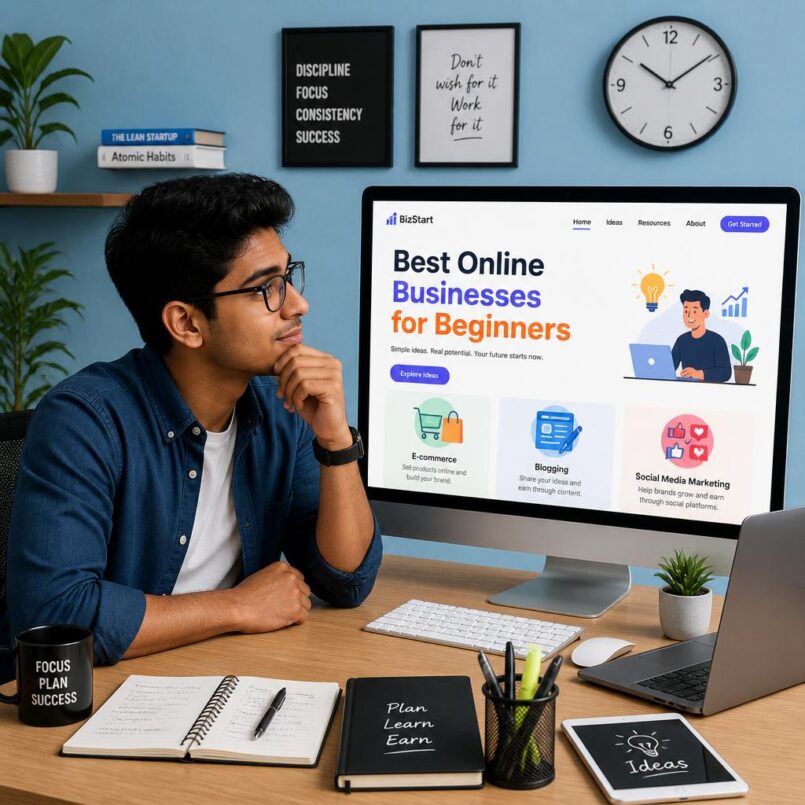
The best online business for beginners is usually not the business model with the biggest income promises. It is the one that matches your skills, available time, budget, interests, willingness to learn, and ability to solve a real customer problem.
Some online business models require inventory, paid advertising, technical development, or a large audience. Others can start with a simple website, a service, useful content, or a small digital product. Beginners should focus on a business model that can be tested with low risk and improved over time.
A good beginner online business should be affordable to start, easy to understand, useful to customers, flexible enough to grow, and realistic about the work required. There is no business model that guarantees success or fast income. Every legitimate online business requires effort, customer value, learning, marketing, and consistent improvement.
What Makes an Online Business Good for Beginners?
A beginner-friendly online business does not need to be completely easy. Every business has challenges. However, a good starting model should allow you to learn important skills without risking large amounts of money.
Qualities of a Good Beginner Business Model
- Low startup costs
- Clear customer demand
- Simple way to test an idea
- Ability to start part time
- Low financial risk
- Opportunity to learn valuable skills
- Potential to grow over time
- Ability to build trust with content or service
- Clear way to deliver value to customers
- Reasonable customer-support requirements
Market research is important before choosing any business model. It helps identify customer demand, competitors, market saturation, customer needs, price expectations, and possible business opportunities. [178]
The best beginner business is often one that starts small. You can test a simple version of the offer, collect feedback, improve the product or service, and grow only when there is real evidence that customers want it.
1. Freelance Services
Freelancing is often one of the best online business models for beginners because you can start by offering a useful service instead of creating a product from scratch. You do not need inventory, a large audience, or a complicated website to begin.
A freelancer provides a skill or service to clients. The service can be delivered remotely and may be sold as a one-time project, hourly work, monthly retainer, consulting package, or ongoing support plan.
Beginner-Friendly Freelance Services
- Blog writing
- Proofreading and editing
- Social-media content creation
- WordPress website setup
- Website maintenance
- Basic SEO audits
- Keyword research
- Video editing with CapCut
- AI video creation with Synthesia.io
- AI voiceover services with ElevenLabs
- Graphic design with Canva
- Email newsletter setup
- Virtual assistance
- Customer support
- Product-description writing
Why Freelancing Is Good for Beginners
- You can start with skills you already have.
- You can learn new skills while building a portfolio.
- You can begin without buying inventory.
- You can work part time while keeping another job.
- You can earn income before building a large audience.
- You can use client feedback to improve your services.
- You can later turn services into an agency, course, templates, or consulting offer.
Simple Freelance Business Example
A beginner learns how to create simple WordPress websites for local businesses. They build a portfolio website, show three example site designs, create a clear service package, and contact businesses with outdated websites. Over time, they can add monthly maintenance, SEO content, email marketing, social-media management, and hosting support.
Freelancing is not passive income. It requires client communication, skill development, deadlines, revisions, and customer service. However, it can be one of the most practical ways to learn internet marketing and earn online.
2. Affiliate Marketing Content Website
Affiliate marketing can be a good option for beginners who enjoy writing, researching, reviewing products, creating videos, or building niche websites. In affiliate marketing, you recommend relevant products or services through tracked links. If someone makes a qualifying purchase, you may earn a commission.
Affiliate marketing works best when the content helps people make better buying decisions. It should not be based on copying product descriptions, using fake reviews, or making exaggerated income claims.
Examples of Affiliate Content
- Detailed product reviews
- Product comparison articles
- “Best tools for” guides
- Step-by-step tutorials
- Beginner buying guides
- Video demonstrations
- Tool setup guides
- Frequently asked questions
- Alternatives and comparison pages
What You Need to Start
- A niche or topic area
- A WordPress website or content platform
- A custom domain name
- Basic website hosting
- Helpful articles or videos
- Affiliate programs relevant to the audience
- Clear affiliate disclosures
- Patience while content and search traffic grow
A website hosted with a provider such as DreamHost or SiteGround can be used to publish reviews, tutorials, comparison articles, category pages, and content clusters. SEO tools such as SE Ranking can help research keywords, track rankings, find competitors, and identify content opportunities.
Important Affiliate Marketing Rule
Affiliate marketing is not a guarantee of income. The Federal Trade Commission states that when a relationship between an endorser and a marketer could affect how people evaluate an endorsement, the relationship should be disclosed clearly and conspicuously. [181]
Use a simple disclosure near affiliate content, such as:
This article may contain affiliate links. If you purchase through a qualifying link, a commission may be earned at no additional cost to you.
3. Digital Products
Digital products are items that customers can access online instead of receiving through physical shipping. They can be created once and sold repeatedly, although they still require updates, support, marketing, secure delivery, and quality control.
Examples of Digital Products
- eBooks
- Checklists
- Printable planners
- Canva templates
- Notion templates
- Spreadsheets
- Prompt packs
- Social-media content calendars
- Website templates
- Business guides
- Resource directories
- Workbooks
- Mini-courses
- Video tutorials
- Digital toolkits
Why Digital Products Can Work for Beginners
- No physical inventory is required.
- No shipping is required.
- Products can be delivered automatically.
- You can start with a small, focused product.
- You can improve the product using customer feedback.
- You can bundle products together later.
- You can sell through a website, email list, social media, or marketplace.
Example Digital Product Idea
A beginner who understands Pinterest marketing could create a Pinterest content-planning spreadsheet, a set of pin templates, and a beginner checklist. They could sell the bundle through ThriveCart, Systeme.io, WooCommerce, Shopify, or another checkout platform.
Start with a small product that solves one clear problem. A simple $7 checklist, $15 template, or $29 toolkit can be easier to create and validate than a massive course with 50 lessons.
4. Online Course or Coaching Business
Online courses and coaching programs can be good businesses for beginners who have useful knowledge, skills, or experience they can teach responsibly. However, beginners should not rush to create a large course before confirming that people actually want the information.
A course works best when it teaches a specific outcome. For example, “How to Build a Beginner WordPress Website” is more focused than “How to Be Successful Online.”
Course and Coaching Examples
- Beginner website-building course
- Social-media content planning workshop
- WordPress setup coaching
- SEO basics training
- Photography editing course
- Fitness coaching program
- Language-learning lessons
- Budgeting workshop
- Career coaching program
- Business systems consultation
Tools for Selling Courses
- ThriveCart
- Systeme.io
- ClickFunnels
- WordPress membership plugins
- Teachable
- Thinkific
- Kajabi
- Podia
Video tools such as Synthesia.io, CapCut, InVideo.io, and ElevenLabs can help create course videos, voiceovers, captions, tutorials, and learning materials. However, the most important part is the quality and usefulness of the education.
Do not make unsupported promises about earnings, health outcomes, business success, or guaranteed results. The FTC has emphasized that earnings claims for business opportunities must be truthful, substantiated, and not misleading. [292]
5. Local Lead Generation Website
Local lead generation is a business model where you create a website that helps local customers find a service. The site may focus on a specific service and location, such as landscaping, pressure washing, plumbing, cleaning, roofing, web design, moving, or personal training.
The goal is to attract people searching for that service, collect their contact information, and either provide the service yourself or refer the lead to a local business.
Example Local Lead Generation Model
A person creates a website about house cleaning services in a specific city. The website includes service pages, location pages, contact forms, customer information, and helpful articles. People searching for cleaning services may find the site through Google or local listings. The website owner can provide the leads to a cleaning business through an agreed arrangement.
Benefits of Local Lead Generation
- Local service demand can be easier to understand.
- Customers often search with clear buying intent.
- Businesses may value qualified leads.
- Content can focus on practical local customer needs.
- SEO can create long-term traffic.
- It can become a recurring monthly service model.
This model requires honest communication, accurate local information, a reliable way to handle leads, and clear agreements with service providers. Never misrepresent yourself as the service provider if you are only generating or referring leads.
6. Content Creator Business
A content creator business is built around publishing useful or entertaining content through YouTube, Instagram, TikTok, Pinterest, blogs, podcasts, newsletters, or other platforms. Income can come from affiliate marketing, sponsorships, ads, digital products, services, memberships, courses, or partnerships.
The key is to create content that serves a defined audience. A content creator should not focus only on follower counts. A smaller audience that trusts the creator can be more valuable than a large audience with little engagement.
Creator Business Ideas
- Tool review channel
- Fitness education content
- DIY tutorial videos
- Small business marketing tips
- WordPress tutorials
- Home organization content
- Productivity tips
- Educational newsletter
- Recipe and meal-planning content
- Career advice content
Content creation usually takes time. It requires consistent publishing, topic research, audience interaction, skill improvement, and repurposing content across platforms. But it can become a powerful long-term asset when combined with an email list and website.
7. eCommerce Store
eCommerce involves selling products online. This can include physical products, print-on-demand items, handmade products, digital downloads, subscriptions, private-label goods, or products sourced from suppliers.
eCommerce can be a good business model, but it is usually more complex than freelancing or affiliate content because it can involve inventory, shipping, customer support, refunds, product quality, supplier relationships, taxes, payments, and advertising.
Beginner-Friendly eCommerce Options
- Digital downloads
- Print-on-demand products
- Handmade items
- Curated product bundles
- Simple niche stores
- Affiliate storefronts
- Low-inventory products
Helium 10 can be useful for Amazon sellers who want to research products, keywords, listings, and marketplace competition. WooCommerce and Shopify can help create online stores. However, no product research tool guarantees a profitable product.
How to Choose the Right Online Business for You
The best business model is one that fits your current situation. Consider the following questions before choosing:
- How much time can I commit each week?
- What skills do I already have?
- What skills am I willing to learn?
- How much money can I afford to invest?
- Do I prefer working with clients or creating products?
- Do I enjoy writing, video, design, teaching, sales, or technical work?
- Do I want faster service income or long-term content income?
- Do I want to work locally, nationally, or globally?
- Can I solve a real problem for a specific group of people?
- Can I build trust and deliver a good customer experience?
Quick Beginner Business Comparison
| Business Model | Startup Cost | Time to First Revenue | Best For |
|---|---|---|---|
| Freelance services | Low | Can be faster with client outreach | People with useful skills or willingness to learn practical services |
| Affiliate content website | Low to moderate | Usually slower because traffic takes time | Writers, researchers, reviewers, and content creators |
| Digital products | Low | Depends on audience and promotion | Creators, educators, designers, and subject-matter experts |
| Online courses or coaching | Low to moderate | Depends on trust and offer quality | People with clear knowledge or professional experience |
| Local lead generation | Low to moderate | Can vary based on local demand and SEO | People interested in local SEO and service businesses |
| eCommerce | Moderate to high | Varies based on product, traffic, and operations | People ready to manage products, customers, and logistics |
A Simple Beginner Action Plan
Step 1: Choose One Business Model
Choose one model that fits your skills and available time. Do not try to start a service business, affiliate website, eCommerce store, course, and YouTube channel all at once.
Step 2: Choose One Audience
Define the specific group of people you want to help. The more clearly you understand their needs, the easier it will be to create useful content and offers.
Step 3: Create a Simple Offer
Your offer can be a service package, digital product, affiliate resource page, course, coaching call, local lead-generation website, or eCommerce product. Keep it focused and clear.
Step 4: Build a Basic Website
Create a simple website with a homepage, About page, Contact page, Privacy Policy, Terms of Use, and one or more helpful content pages. Add an email sign-up form as early as possible.
Step 5: Create Helpful Content
Publish articles, videos, social posts, or tutorials that answer real customer questions. Focus on practical, people-first content instead of trying to publish huge amounts of generic content. Google recommends creating content primarily for people, not simply to manipulate search rankings. [179]
Step 6: Choose One Traffic Source
Start with SEO, YouTube, Pinterest, TikTok, Instagram, LinkedIn, local search, or direct outreach. Learn one channel well before trying to master all of them.
Step 7: Collect Feedback and Improve
Ask customers, readers, viewers, or clients what they need. Use support questions, comments, reviews, and search data to improve your content, offers, and customer experience.
Final Thoughts
The best online business for beginners is usually one that starts with a clear problem, a defined audience, low financial risk, and a realistic plan for creating value. Freelancing, affiliate content websites, digital products, simple courses, local lead generation, and creator businesses can all be good starting points depending on your skills and goals.
Do not choose a business model because someone promises easy money or fast results. Choose one that you can understand, test, improve, and operate honestly. Build skills, publish useful content, serve customers well, and give yourself enough time to learn.
Long-term online success is built through trust, customer value, consistent effort, and smart decisions—not shortcuts or unrealistic promises.
Frequently Asked Questions
What is the easiest online business for beginners?
Freelance services are often one of the easiest online business models to start because you can offer a useful skill without buying inventory or building a large audience first. Affiliate content websites and digital products can also be beginner-friendly but may take longer to generate income.
What online business can I start with little money?
You can start a freelance service, affiliate content website, blog, digital product business, newsletter, local lead-generation website, or social-media service business with relatively low startup costs. A domain, basic website hosting, and essential software are often enough to begin.
Is affiliate marketing good for beginners?
Affiliate marketing can be good for beginners who enjoy creating helpful content, reviews, comparisons, and tutorials. It requires patience because traffic and trust usually take time to build.
Can I start an online business part time?
Yes. Many people start online businesses while working full time. Choose a model that fits your available hours, create a weekly schedule, and focus on consistent progress rather than trying to do everything at once.
Do I need a lot of money to start an online business?
No. Some online businesses can start with low costs, especially service businesses, content websites, affiliate marketing, and digital products. eCommerce and paid advertising can require more capital.
Which online business makes the most money?
No business model guarantees the most money. Profit depends on customer demand, quality of the offer, pricing, marketing, expenses, customer retention, execution, and time. Choose a model that fits your skills and solves a real problem.
What should I avoid when choosing an online business?
Avoid business opportunities that promise guaranteed income, no work, instant results, or risk-free profits. Also avoid models that require large investments before you have validated customer demand.