Vitamin B1, also called thiamine (often written incorrectly as “Vitamin 1”), is a key nutrient your body needs to turn food into usable energy and to keep your heart, nerves, and brain functioning properly. Most adults need just over 1 milligram per day, but even this small amount is essential.
What Vitamin B1 does for your body
Vitamin B1 plays a central role in glucose metabolism, helping your cells convert carbohydrates into energy they can use. This supports a healthy metabolism and helps prevent fatigue and weakness linked to low thiamine levels. It also acts as a coenzyme in several reactions needed for energy production in the heart and muscles, which is why deficiency can lead to serious problems like beriberi and heart failure.
Thiamine is crucial for normal nerve and brain function, supporting the transmission of nerve impulses and the production of important neurochemicals. Adequate Vitamin B1 helps maintain muscle coordination and mental alertness, and deficiency has been linked to conditions such as Wernicke–Korsakoff syndrome, confusion, and memory problems, especially in people with alcohol dependence. It also supports a healthy immune system and may contribute to eye health and kidney function, making it important for overall resilience and well‑being.
Daily requirement for Vitamin B1
For typical healthy adults, recommended daily intake is about 1.2 milligrams of Vitamin B1 per day for men and about 1.1 milligrams per day for women. People who are pregnant or breastfeeding are often advised to get around 1.4 milligrams per day to cover the increased needs of both parent and baby.
Children and teenagers have slightly lower requirements that increase with age, but all age groups need a steady supply because the body does not store large amounts of thiamine. Very active people and athletes may need somewhat more due to higher energy turnover, which can usually be met by eating additional nutrient‑rich foods rather than taking high‑dose supplements. Since thiamine is generally considered safe and non‑toxic at usual supplemental doses, a standard multivitamin providing a few milligrams of B1 is more than enough for most people, but anyone with symptoms of deficiency should consult a healthcare professional for testing and tailored advice.
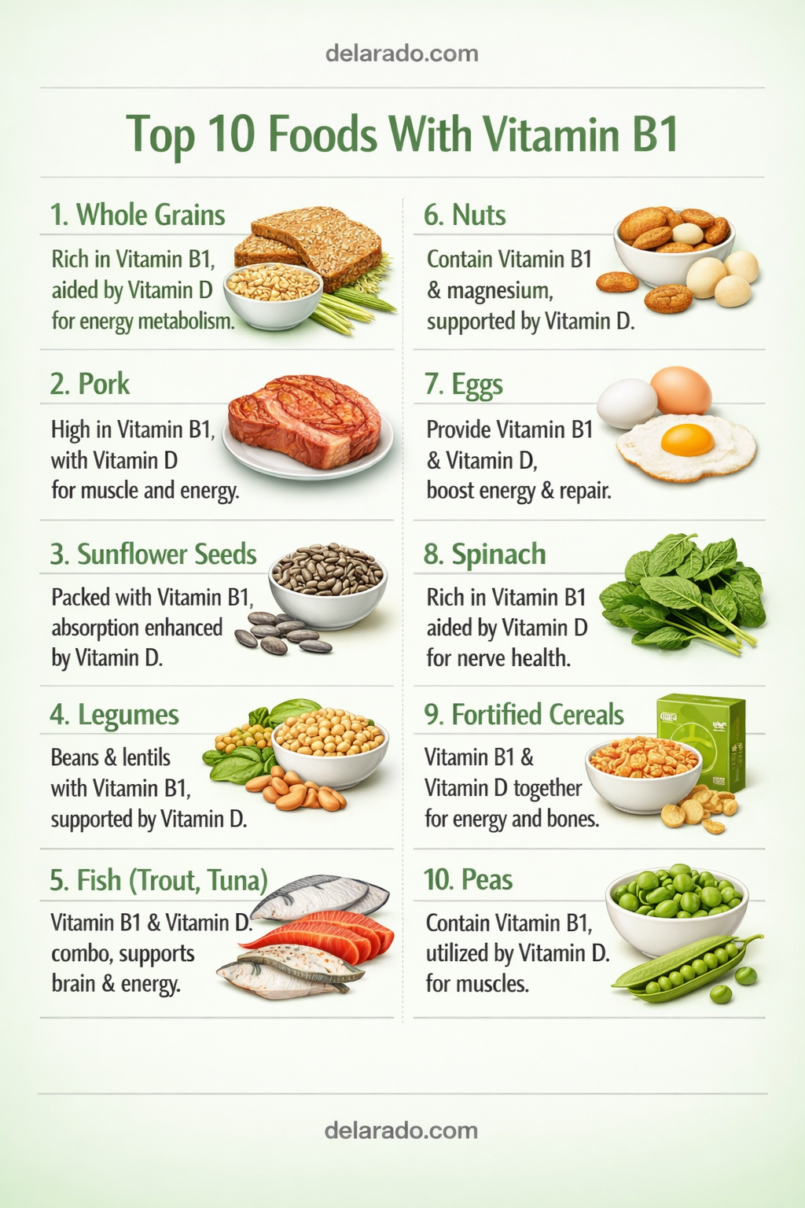
Top 10 Foods with Vitamin B1
1. Whole Grains
Whole grains like brown rice and oats are rich in Vitamin B1 (thiamine). Vitamin D helps regulate calcium and phosphorus, indirectly supporting the metabolic processes that rely on B1 for energy conversion.
2. Pork
Pork is one of the best sources of Vitamin B1. When combined with Vitamin D, it enhances muscle function and energy metabolism, helping maintain strength and endurance.
3. Sunflower Seeds
Sunflower seeds provide Vitamin B1 and healthy fats. Vitamin D supports the absorption of these nutrients, improving nerve function and energy production.
4. Legumes
Beans, lentils, and peas are packed with Vitamin B1. Vitamin D aids in the utilization of B‑vitamins, promoting balanced metabolism and cellular repair.
5. Fish (Trout, Tuna)
Fish offers Vitamin B1 along with Vitamin D and omega‑3s. This combination supports brain health, energy conversion, and immune balance.
6. Nuts
Almonds and macadamias contain Vitamin B1 and magnesium. Vitamin D helps regulate these minerals, improving nerve signaling and energy release.
7. Eggs
Eggs provide Vitamin B1 and Vitamin D together. They support muscle repair, hormone balance, and efficient energy metabolism.
8. Spinach
Spinach is rich in Vitamin B1 and antioxidants. Vitamin D enhances the absorption of nutrients, promoting healthy nerves and metabolism.
9. Fortified Cereals
Fortified cereals combine Vitamin B1 and Vitamin D, offering a convenient way to boost energy and support bone health simultaneously.
10. Peas
Peas contain Vitamin B1 and plant protein. Vitamin D helps the body use these nutrients efficiently, supporting muscle and nerve function.