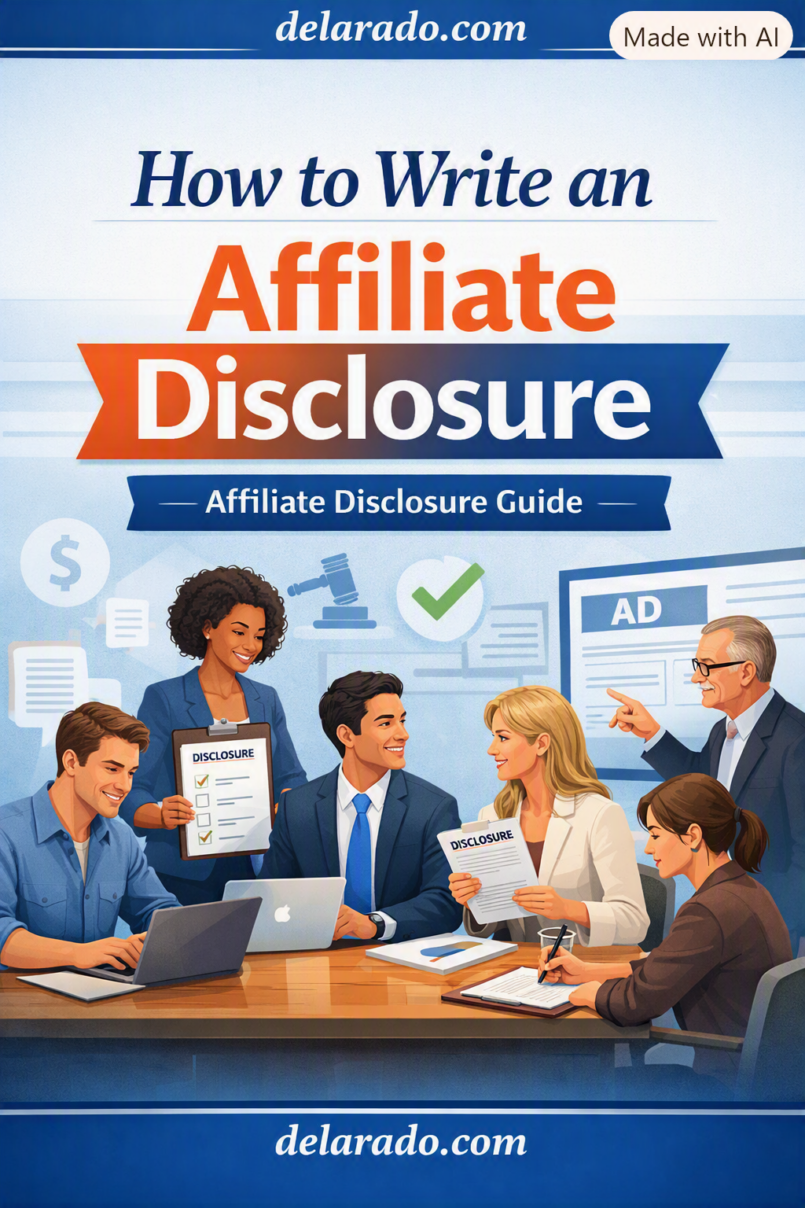
An affiliate disclosure is a clear statement telling readers, viewers, or subscribers that you may earn a commission if they purchase through an affiliate link. A good disclosure uses plain language, appears where people can easily notice it, and is placed before or near the recommendation or link.
The goal is transparency. People should know that you have a financial relationship with a product or company before they rely on your recommendation or click the link. A disclosure should not be hidden in a footer, buried in a long legal page, written in confusing language, or placed after a visitor has already clicked away.
Who Is This Topic For?
This guide is for bloggers, YouTubers, social-media creators, affiliate marketers, newsletter writers, podcasters, course creators, consultants, website owners, and anyone who earns or may earn commissions from product recommendations.
This Article Is Helpful If You Want To:
- Write an affiliate disclosure
- Add disclosures to blog posts
- Disclose affiliate links on YouTube
- Disclose affiliate links in email
- Disclose affiliate links on social media
- Write an Amazon Associates disclosure
- Create an affiliate disclosure page
- Promote products transparently
- Avoid hiding affiliate relationships
- Build more audience trust
What Is an Affiliate Disclosure?
An affiliate disclosure is a statement that explains you may receive compensation when someone uses a link or recommendation connected to a product, service, brand, or merchant.
Simple Affiliate Disclosure Example
Disclosure: This article contains affiliate links. If you purchase through a qualifying link, I may earn a commission at no additional cost to you.
This statement tells readers three important things:
- The content contains affiliate links
- You may earn a commission
- The reader may not pay an additional cost because of the link
Do not make the “no additional cost” statement unless it is accurate for the program, product, and audience you are addressing.
Why Affiliate Disclosures Matter
Creates Transparency
A disclosure tells people that you may financially benefit if they purchase through a link. This lets them evaluate your recommendation with appropriate context.
Builds Trust
People are more likely to trust a creator or business that is open about financial relationships than one that hides them.
Supports Ethical Marketing
A disclosure encourages you to treat affiliate recommendations as transparent suggestions rather than disguised advertisements.
May Be Required by Programs
Many affiliate programs require participants to disclose their affiliate relationship. Review the terms of each program you join.
May Be Required by Law or Platform Rules
Depending on your location, audience, platform, and relationship with a brand, consumer-protection or advertising rules may require clear disclosure of material connections.
Helps Separate Opinion From Promotion
A disclosure does not mean your opinion is false. It means readers should know that you may earn a commission if they use your recommendation.
Benefits of Clear Disclosure
Improves Audience Trust
Readers and viewers can make a more informed decision when they know that a link may earn you a commission.
Creates Better Content Habits
When you disclose relationships clearly, you are more likely to recommend products responsibly and explain both benefits and limitations.
Reduces Confusion
A clear disclosure can prevent readers from assuming a recommendation is completely independent when there is a financial relationship.
Supports Long-Term Reputation
Transparency can protect your credibility over time. One hidden financial relationship can damage trust more than one openly disclosed affiliate link.
Helps You Follow Program Terms
Many affiliate programs include disclosure requirements. Using a consistent disclosure process can help you avoid accidental omissions.
Works Across Platforms
You can adapt disclosures for blog posts, videos, emails, social posts, podcasts, resource pages, live streams, and link-in-bio pages.
Risks and Limitations
A Disclosure Does Not Make a Bad Recommendation Acceptable
You should not promote a misleading, unsuitable, unsafe, poor-quality, or irrelevant product simply because you disclosed that you may earn a commission.
One Disclosure May Not Cover Every Platform
A website footer disclosure may not be enough for a YouTube description, social post, email, podcast episode, or live stream. Put disclosure where people encounter the recommendation.
Program Rules Can Be Different
Different affiliate programs may require specific wording, placement, or additional identification. Always check the current program agreement.
Disclosure Requirements Can Change
Consumer-protection guidance, advertising rules, platform policies, and affiliate agreements can change. Review your disclosure practices regularly.
Short-Form Content Can Create Space Challenges
Social media captions, Stories, short videos, and link-in-bio tools may give you limited space. Use simple, direct language and place it close to the recommendation or link.
Disclosure May Not Solve Every Compliance Issue
You may still need to comply with privacy, email marketing, advertising, product claim, intellectual property, endorsement, tax, and platform requirements.
What Makes a Good Disclosure?
A good affiliate disclosure is clear, visible, understandable, and close to the relevant recommendation.
Good Disclosure Characteristics
- Uses plain language
- Explains that you may earn a commission
- Appears before or near the affiliate link
- Is easy to notice
- Uses readable text size
- Uses sufficient contrast
- Fits the platform where it appears
- Does not require readers to click another page
- Does not use confusing legal language
- Is repeated when recommendations appear in multiple places
Weak Disclosure Examples
- This post may contain links.
- Some links may be compensated.
- Disclosure in footer only.
- See my legal page for more information.
- Affiliate link after the link has already appeared.
Why These Are Weak
They do not clearly explain that you may earn a commission if someone purchases. They may also be easy to miss or too vague for an ordinary reader to understand.
Stronger Disclosure Examples
- Disclosure: This article contains affiliate links. If you purchase through a qualifying link, I may earn a commission.
- Some links below are affiliate links, meaning I may earn a commission if you make a qualifying purchase.
- This video includes affiliate links. I may earn a commission if you purchase through a qualifying link in the description.
- Affiliate disclosure: I may earn a commission if you buy through links in this email.
Where to Put an Affiliate Disclosure
Place disclosure where people can see it before or near the recommendation, endorsement, or link.
For Blog Posts
- Near the beginning of the article
- Before the first affiliate link
- Near product comparison tables
- Near recommendation buttons
- Before a product resource section
For YouTube Videos
- Near the top of the video description
- Before affiliate links in the description
- In the video itself when appropriate
- In on-screen text when the relationship may not be obvious
- In a pinned comment if you use affiliate links there
For Social Media
- At the beginning of the caption
- Near a product recommendation
- Near a link or link-in-bio call to action
- In visible on-screen text for short videos when appropriate
- Near Story links
- On the linked resource page
For Emails
- Near the beginning of an affiliate-focused email
- Before affiliate links
- Near recommendation buttons
- In a resource list containing affiliate links
For Podcasts
- Verbally before or during an affiliate recommendation
- In episode show notes
- Near the affiliate link in the episode page
Do not rely on one disclosure page to cover every recommendation across all content formats.
Step-by-Step Process
Step 1: Identify Material Relationships
Make a list of every situation where you may receive compensation or another benefit connected to a recommendation.
Relationships That May Need Disclosure
- Affiliate commissions
- Sponsored content
- Paid partnerships
- Free products
- Gifted services
- Discounted products
- Referral fees
- Revenue share agreements
- Employment relationships
- Family relationships with a business
- Ownership or investment relationships
- Free trials or product access provided by a brand
Example
You write a product review after receiving a free product from the company and also include an affiliate link. Disclose both the free product and the affiliate relationship clearly.
When in doubt, transparency is generally better than leaving the audience to guess about your relationship with a brand.
Step 2: Write Plain-Language Disclosure
Use simple words that an ordinary person can understand. Avoid legal jargon or vague phrases.
Basic Disclosure Formula
Disclosure: This [article/video/email/post] contains affiliate links. If you [purchase/use/sign up through] a qualifying link, I may earn a commission.
Optional Addition
I recommend products based on their relevance to this topic and audience, but you should review current product details before making a purchase.
Example for a Blog Article
Disclosure: This article contains affiliate links. If you purchase through a qualifying link, I may earn a commission at no additional cost to you. I recommend products based on their relevance to the topic and audience.
Example for a Video
Disclosure: This video includes affiliate links. If you make a qualifying purchase through a link in the description, I may earn a commission.
Example for Social Media
Affiliate: I may earn a commission if you purchase through a qualifying link in my profile.
Example for Email
Disclosure: Some links in this email are affiliate links. If you make a qualifying purchase through one of these links, I may earn a commission.
Step 3: Match the Disclosure to the Platform
Use a version that fits the content format while still being clear enough for the audience to understand.
| Platform | Disclosure Example |
|---|---|
| Blog post | Disclosure: This article contains affiliate links. If you purchase through a qualifying link, I may earn a commission. |
| YouTube description | This video contains affiliate links. I may earn a commission if you purchase through qualifying links below. |
| YouTube spoken disclosure | Before we begin, please note that some links in the description are affiliate links, meaning I may earn a commission if you purchase through them. |
| Instagram caption | Affiliate: I may earn a commission if you purchase through the link in my profile. |
| TikTok video | Affiliate link in bio. I may earn a commission if you purchase through a qualifying link. |
| Story with product link | Affiliate link: I may earn a commission if you purchase through this link. |
| Email newsletter | Disclosure: Some links in this email are affiliate links. I may earn a commission if you make a qualifying purchase. |
| Podcast | This episode includes affiliate links. If you purchase through a qualifying link in the show notes, I may earn a commission. |
Do not shorten the disclosure so much that it becomes unclear. The audience should understand the relationship without needing to interpret vague wording.
Step 4: Place the Disclosure Before the Link
People should see the disclosure before or near the recommendation and affiliate link. Do not wait until the end of a long article or description.
Weak Placement
Affiliate link appears near the top of the page.
Disclosure appears after several thousand words or only in the footer.
Stronger Placement
Disclosure appears near the top of the page.
Affiliate product recommendation appears later in the article with a second brief reminder near the link if needed.
Example Article Opening
Disclosure: This article contains affiliate links. If you purchase through a qualifying link, I may earn a commission at no additional cost to you.
Choosing WordPress hosting can feel confusing when you are building your first website. This guide explains the key factors beginners should compare before selecting a plan.
This lets readers understand the relationship before they reach product links or recommendations.
Step 5: Use Readable Design
A disclosure should be readable. Do not use tiny text, low contrast, hidden accordions, difficult colors, or styling that makes the message easy to overlook.
Design Checklist
- Use readable font size
- Use clear contrast
- Use plain language
- Keep it visible without scrolling excessively
- Do not hide it in a tooltip
- Do not require a click to reveal it
- Make it readable on mobile
- Keep it near the relevant content
Example HTML Disclosure
<p><em>Disclosure: This article contains affiliate links. If you purchase through a qualifying link, I may earn a commission at no additional cost to you.</em></p>
Example Inline Style
<p style="background-color: #fff7e6; border-left: 4px solid #f4a261; padding: 15px; color: #333;">
  <strong>Disclosure:</strong> This article contains affiliate links. If you purchase through a qualifying link, I may earn a commission at no additional cost to you.
</p>
Use styling that supports visibility without making the disclosure look like an advertisement or distracting from the content.
Step 6: Add Program-Specific Language When Required
Some affiliate programs require specific disclosure wording. Review each affiliate agreement and use any required language accurately.
Amazon Associates Example
As an Amazon Associate I earn from qualifying purchases.
If you participate in Amazon Associates, use its required statement clearly and prominently in addition to any broader affiliate disclosure you use.
Example Combined Disclosure
Disclosure: This article contains affiliate links. If you purchase through a qualifying link, I may earn a commission at no additional cost to you. As an Amazon Associate I earn from qualifying purchases.
Do not assume one program’s required wording applies to every other affiliate program. Check each agreement.
Step 7: Disclose Free Products and Sponsorships Too
Affiliate commissions are not the only relationship that may need disclosure. Be transparent when a company provides a product, service, payment, discount, free access, or another benefit connected to your recommendation.
Free Product Disclosure Example
Disclosure: [Brand] provided this product for review. I may also earn a commission if you purchase through qualifying links in this article.
Sponsored Content Disclosure Example
Sponsored: This post was created in partnership with [Brand]. I received compensation for this content.
Employee Relationship Disclosure Example
Disclosure: I work with [Company], so I have a professional relationship with this product.
Family Relationship Disclosure Example
Disclosure: This business is owned by a family member, and I may benefit from purchases made through this link.
Use direct wording that explains the relationship instead of assuming people will understand it from context.
Step 8: Create an Affiliate Disclosure Page
An affiliate disclosure page can provide broader information about your website’s affiliate relationships. It is useful, but it should not replace disclosure near individual affiliate links or recommendations.
What to Include on a Disclosure Page
- Explanation of affiliate links
- Statement that you may earn commissions
- Explanation that commissions may support the site or content
- Commitment to honest recommendations
- Statement that product information can change
- Reminder that readers should review current product details
- Program-specific disclosure language when required
- Link to your privacy policy
- Contact information for questions
Example Disclosure Page Intro
This website may contain affiliate links. If you click a qualifying link and make a purchase, I may earn a commission. This does not change the price you pay in many programs, but you should review the merchant’s current terms before purchasing. I aim to recommend products that are relevant to the topics discussed, but product pricing, features, availability, and policies can change.
Link to this page in your footer, but continue using clear disclosures within each article, video, email, or social post that contains affiliate recommendations.
Affiliate Disclosure Templates
Short General Disclosure
Disclosure: This content contains affiliate links. I may earn a commission if you make a qualifying purchase.
Blog Post Disclosure
Disclosure: This article contains affiliate links. If you purchase through a qualifying link, I may earn a commission at no additional cost to you. I recommend products based on their relevance to the topic and audience.
Product Review Disclosure
Disclosure: This review contains affiliate links. If you purchase through a qualifying link, I may earn a commission. Product pricing, features, and policies can change, so review current details directly before purchasing.
YouTube Description Disclosure
Disclosure: This video contains affiliate links. If you purchase through a qualifying link in the description, I may earn a commission at no additional cost to you.
YouTube Spoken Disclosure
Before we begin, please note that some links in this video description are affiliate links. If you purchase through a qualifying link, I may earn a commission.
Instagram or TikTok Disclosure
Affiliate: I may earn a commission if you purchase through a qualifying link in my profile.
Social Story Disclosure
Affiliate link: I may earn a commission if you purchase through this link.
Email Disclosure
Disclosure: Some links in this email are affiliate links. If you make a qualifying purchase through one of these links, I may earn a commission.
Resource Page Disclosure
Disclosure: Some tools listed on this resource page are affiliate links. If you purchase through a qualifying link, I may earn a commission.
Free Product and Affiliate Disclosure
Disclosure: [Brand] provided this product for review. This content may also contain affiliate links, which means I may earn a commission if you make a qualifying purchase.
Sponsored and Affiliate Disclosure
Sponsored: This content was created in partnership with [Brand]. I received compensation, and this post may also include affiliate links that may earn a commission from qualifying purchases.
Common Disclosure Mistakes
Hiding Disclosure in a Footer
A footer disclosure may be useful as general site information, but it is often too far from the recommendation or affiliate link to provide meaningful context.
Using Vague Wording
Phrases such as “may contain links” or “some links may be compensated” may not clearly explain that you may earn a commission from a purchase.
Putting the Disclosure After the Link
Readers should see the disclosure before or near the affiliate recommendation, not after they have already clicked.
Using Tiny or Low-Contrast Text
If a disclosure is difficult to read, it is less useful. Use readable text, clear contrast, and placement that works on mobile.
Relying Only on a Legal Page
A disclosure page is useful, but it does not replace in-context disclosure in articles, videos, emails, social posts, and resource pages.
Forgetting Video Disclosures
Do not place affiliate links in a video description without explaining the relationship. Include disclosure in the description and consider spoken or on-screen disclosure when appropriate.
Forgetting Email Disclosures
Affiliate links in email should be disclosed clearly. Subscribers should understand that you may earn a commission from qualifying purchases.
Not Disclosing Free Products
If a company gave you a product, service, discount, or access in connection with a recommendation, disclose that relationship clearly.
Assuming Hashtags Are Enough
A vague or buried hashtag may not clearly explain the affiliate relationship. Use direct language people can understand.
Using Disclosure as a Substitute for Honesty
A disclosure does not excuse fake reviews, unsupported claims, misleading product demonstrations, hidden subscription terms, or irrelevant recommendations.
Affiliate Disclosure Checklist
Before Publishing
- Does this content include affiliate links?
- Could I earn a commission from a purchase?
- Did I receive a product, payment, discount, or other benefit?
- Does the affiliate program require specific wording?
- Is the disclosure written in plain language?
- Is it placed before or near the recommendation?
- Is it easy to read on mobile?
- Does it appear in the video, email, post, or page where the recommendation appears?
- Are product claims accurate?
- Are limitations explained?
For Blog Posts
- Disclosure near the top
- Disclosure before the first affiliate link
- Clear recommendation context
- Current product information
- Relevant affiliate link placement
For Videos
- Disclosure near the top of the description
- Disclosure before affiliate links
- Spoken or on-screen disclosure when appropriate
- Accurate title and thumbnail
- No fake product results or testimonials
For Social Media
- Disclosure near the recommendation
- Readable disclosure in video or caption
- Link destination matches the post
- Affiliate relationship clear before a link click
- No misleading product claims
For Email
- Clear affiliate disclosure
- Relevant product recommendation
- Accurate subject line
- Permission-based subscriber list
- Appropriate unsubscribe option where required
Programs That Can Help
WordPress
WordPress can help create affiliate disclosure pages, add disclosure notices to articles, build reusable content blocks, organize resource pages, and add affiliate disclosures to site templates.
Elementor, Kadence, or Similar Builders
Page builders can help create reusable disclosure blocks, callout boxes, styled notices, footer links, resource pages, and mobile-friendly affiliate content layouts.
Canva
Canva can help create readable disclosure graphics, Story templates, video overlays, carousel text, social-media graphics, and visual content where an on-screen disclosure is needed.
YouTube Studio
YouTube Studio can help edit video descriptions, add links, manage captions, update content details, and review affiliate-related video content.
Email Marketing Platforms
MailerLite, ConvertKit, Brevo, Mailchimp, and similar tools can help create reusable email templates with affiliate disclosures, unsubscribe links, and audience segmentation.
Link Management Tools
Link management tools can help organize affiliate links, update destinations, identify broken links, and maintain records of where affiliate links appear. Use only methods permitted by affiliate programs.
Affiliate Program Dashboards
Affiliate dashboards can provide program terms, required disclosure language, approved links, promotional restrictions, product details, reporting, and payment information.
Frequently Asked Questions
What is an affiliate disclosure?
An affiliate disclosure is a statement telling people that you may earn a commission if they purchase through an affiliate link or qualifying recommendation.
Where should I put an affiliate disclosure?
Place it before or near the affiliate recommendation or link. Use a disclosure near the top of affiliate articles, in YouTube descriptions before links, near social recommendations, and in emails containing affiliate links.
Do I need an affiliate disclosure on every page?
Use disclosure on pages, posts, videos, emails, and social content that contain affiliate links or recommendations that may earn you a commission. A general disclosure page is useful but does not replace in-context disclosure.
What is a simple affiliate disclosure example?
Disclosure: This article contains affiliate links. If you purchase through a qualifying link, I may earn a commission at no additional cost to you.
Can I put an affiliate disclosure in my footer?
A footer disclosure can provide general site information, but it should not be your only disclosure. Add clear disclosure near the specific recommendation or affiliate link.
Do I need to disclose affiliate links on YouTube?
Yes. Include clear disclosure near the top of the video description and before affiliate links. Consider a spoken or on-screen disclosure when appropriate for the content and audience.
Do I need to disclose affiliate links on social media?
Yes. Use clear language near the recommendation, caption, Story link, profile-link call to action, or on-screen video content. Do not hide disclosure among hashtags or at the end of a long caption.
Do I need to disclose affiliate links in email?
Yes. If an email includes affiliate links, use a clear statement that you may earn a commission from qualifying purchases. Also follow applicable email marketing and unsubscribe requirements.
What is the Amazon Associates disclosure?
Amazon Associates requires the statement: “As an Amazon Associate I earn from qualifying purchases.” Check the current program agreement for placement and other requirements.
Do I need to disclose free products?
Yes, if a company provided a product, service, discount, free access, or other benefit connected to your recommendation. Explain the relationship clearly.
Does an affiliate disclosure make any claim acceptable?
No. You should still avoid misleading claims, fake reviews, unsupported results, false scarcity, hidden subscription terms, and recommendations that do not fit the audience.
What should I avoid when writing an affiliate disclosure?
Avoid vague wording, hidden placement, tiny text, low contrast, disclosure after links, relying only on a legal page, forgetting video and email disclosures, and assuming readers understand your financial relationship without being told.