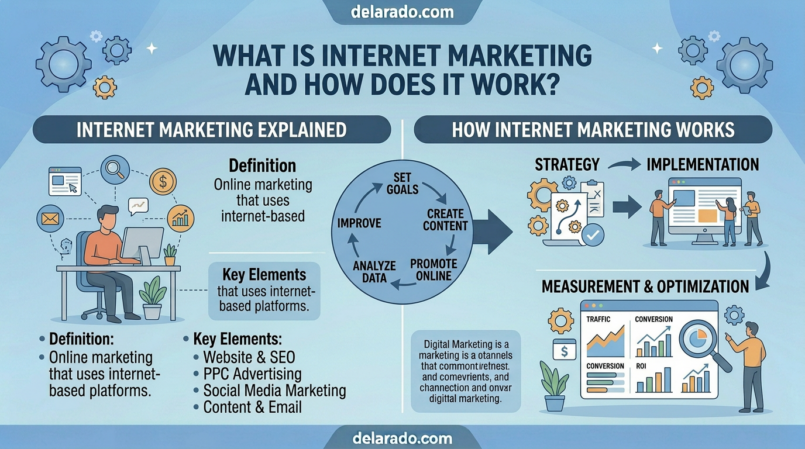
Internet marketing is the process of using online channels to attract an audience, build trust, generate leads, promote products or services, and create customer relationships. It is also commonly called online marketing or digital marketing. Businesses use internet marketing through websites, search engines, social media, email, video platforms, paid ads, affiliate programs, online communities, and eCommerce stores.
At its core, internet marketing is not about posting random content or buying expensive software. It is about helping the right people discover a useful solution to a problem they already have. A local business may use internet marketing to get phone calls and appointment bookings. A blogger may use it to attract search traffic and earn affiliate commissions. A creator may use it to grow an audience and sell digital products. An online store may use it to promote products and build repeat customers.
The tools and platforms can change, but the basic principles remain the same: understand the customer, create value, communicate clearly, build trust, make the next step easy, and improve based on real feedback and results.
What Does Internet Marketing Include?
Internet marketing includes many different channels. A business does not need to use every one of them. The best choice depends on the audience, the offer, the business model, budget, available time, and type of content the business can create consistently.
Website Marketing
A website is often the center of an internet marketing strategy. It gives a business a place to explain what it does, publish content, collect email subscribers, promote services, sell products, answer frequently asked questions, and build long-term trust.
A website can include a homepage, About page, service pages, product pages, blog posts, landing pages, reviews, comparisons, resource pages, contact forms, legal pages, and a customer-support section. Unlike a social-media profile, a website is an asset that the business controls.
Search Engine Optimization
Search engine optimization, often called SEO, is the process of improving a website so it can appear in search results when people look for relevant information. SEO can help a business attract visitors from Google and other search engines without paying for every click.
SEO may involve keyword research, writing helpful articles, improving website speed, adding internal links, fixing technical errors, creating useful product pages, and earning trustworthy links from other websites. It does not guarantee rankings, but it can become a valuable long-term traffic channel when a website consistently publishes useful content.
Content Marketing
Content marketing means creating useful information that helps people before asking them to buy. Content can include blog posts, videos, checklists, tutorials, eBooks, case studies, product comparisons, webinars, newsletters, social-media posts, and online courses.
For example, a business that sells email marketing software may create articles about building an email list, writing welcome sequences, improving open rates, and creating lead magnets. The content helps potential customers solve problems while showing how the company’s product may fit into the solution.
Social Media Marketing
Social media marketing uses platforms such as Instagram, Pinterest, TikTok, YouTube, Facebook, LinkedIn, and X to build awareness, share content, engage with an audience, and drive traffic to a website or offer.
Each platform has a different purpose. Pinterest can be useful for evergreen visual content and blog traffic. YouTube can be useful for tutorials, reviews, and demonstrations. Instagram can be useful for Reels, Stories, carousels, and direct-message conversations. LinkedIn can help service providers and business-to-business companies build professional relationships.
Email Marketing
Email marketing helps businesses communicate directly with people who voluntarily subscribe to receive updates. An email list can be used to share useful content, deliver lead magnets, welcome new subscribers, promote products, educate customers, provide support, and build long-term relationships.
Unlike a social-media audience, an email list is not fully dependent on a platform algorithm. A business can use email to bring subscribers back to its website, articles, videos, products, webinars, and services.
Video Marketing
Video marketing uses visual content to explain, demonstrate, teach, entertain, or sell. It can include YouTube tutorials, TikTok videos, Instagram Reels, product demos, webinars, sales videos, explainer videos, screen recordings, course lessons, and customer onboarding videos.
Video can be especially useful when a product needs to be demonstrated or when a customer needs to see a process. Tools such as CapCut, InVideo.io, Synthesia.io, ElevenLabs, Kling.ai, and Instadoodle can help businesses create and edit videos, voiceovers, AI avatars, visual explainers, and short-form content.
Affiliate Marketing
Affiliate marketing is a model where a publisher earns a commission for referring a customer to a product or service through a tracked link. Bloggers, YouTubers, newsletter publishers, review sites, and social-media creators may use affiliate marketing as one revenue source.
Affiliate marketing should be done transparently. Recommendations should be relevant, honest, and useful. The Federal Trade Commission states that a material connection between an endorser and a marketer should be disclosed clearly and conspicuously when that relationship could affect how people evaluate the endorsement. [181]
Paid Advertising
Paid advertising involves paying to show ads to a chosen audience. Common platforms include Google Ads, Facebook Ads, Instagram Ads, TikTok Ads, YouTube Ads, Pinterest Ads, and LinkedIn Ads.
Paid ads can generate traffic quickly, but they can also become expensive if a business does not understand its audience, offer, landing page, conversion tracking, and profit margins. Paid traffic usually works best after an offer has been tested and the business has a clear way to measure whether the advertising spend produces profitable results.
How Internet Marketing Works Step by Step
Internet marketing usually follows a customer journey. A person does not always buy immediately. They may need information, trust, proof, comparison options, time, and repeated exposure before making a decision.
Step 1: A Person Has a Problem or Goal
Every business begins with a customer need. A person may want to lose time-consuming manual work, learn a skill, improve a website, choose a product, save money, solve a technical problem, start a business, or find a local service.
Internet marketing is most effective when the business understands the customer’s actual problem instead of only focusing on product features.
Step 2: The Person Searches for Information
People search online through Google, YouTube, TikTok, Pinterest, social media, online communities, product-review sites, forums, newsletters, podcasts, and AI search tools. They may search questions such as:
- What is the best web hosting for beginners?
- How do I start affiliate marketing?
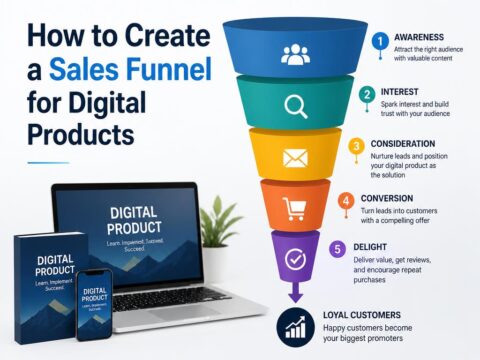
- How do I create a sales funnel?
- What is the best SEO tool for a small business?
- How do I create a product video?
A business can attract these people by creating content that directly answers those questions.
Step 3: The Business Provides Value
The business publishes helpful content, a video, a guide, a comparison, a product demo, or another resource that gives the visitor useful information. The goal is to help the person make progress, even if they do not buy immediately.
Google’s guidance emphasizes helpful, reliable, people-first content that is created primarily to benefit people rather than manipulate search rankings. Strong content should have a clear audience, show real expertise or experience, answer the user’s need, and leave readers feeling satisfied with what they learned. [237]
Step 4: The Business Builds Trust
Trust is built through accurate information, useful content, transparent disclosures, clear contact information, helpful support, honest reviews, visible policies, real examples, and a professional website experience.
Visitors are more likely to trust a business when it explains limitations, avoids exaggerated claims, discloses affiliate relationships, uses clear pricing, and makes it easy to find support or refund information.
Step 5: The Business Offers a Clear Next Step
After providing value, the business can invite the visitor to take a relevant next step. That step may be:
- Read another related article
- Watch a tutorial video
- Subscribe to an email newsletter
- Download a free checklist
- Book a consultation
- Request a quote
- Start a trial
- View a product page
- Purchase a product or service
The best call to action matches what the visitor needs at that stage. A new visitor may be more likely to download a guide than purchase an expensive service immediately.
Step 6: The Business Delivers on Its Promise
Marketing does not end when a customer buys. A good business provides what it promised, delivers products or services on time, helps customers get value, answers support questions, handles refunds professionally, and improves based on feedback.
Customer satisfaction can lead to repeat purchases, reviews, referrals, testimonials, and stronger long-term business growth.
Why Internet Marketing Is Important
Internet marketing is important because people research, compare, communicate, and buy online every day. A business without an online presence may be difficult for potential customers to find or trust.
Benefits of Internet Marketing
- Reach people outside your immediate location
- Build an audience over time
- Educate customers before they buy
- Create long-term search traffic through SEO
- Build an email list you can communicate with directly
- Use video and social media to build trust
- Measure traffic, leads, sales, and conversions
- Improve campaigns based on real data
- Sell products and services at any time of day
- Build a brand that is not dependent on one physical location
Internet marketing can help a small business compete because it allows useful content, excellent customer service, focused positioning, and niche expertise to stand out. A smaller business does not need to outspend a large competitor if it can better serve a specific audience.
Examples of Internet Marketing in Action
Example 1: Affiliate Marketing Website
A website publishes detailed reviews, comparisons, tutorials, and buying guides for web tools. It attracts visitors through Google search, Pinterest, YouTube, and email. When readers click an affiliate link and buy a relevant tool, the website may earn a commission.
To remain trustworthy, the site should explain pros and cons, publish clear disclosures, update pricing and features, avoid false claims, and recommend tools that genuinely fit the audience.
Example 2: Local Service Business
A local cleaning company creates a website with service pages, city pages, reviews, a contact form, and a Google Business Profile. It uses local SEO, Facebook posts, Google Ads, and email follow-up to generate quote requests and bookings.
Example 3: Digital Product Creator
A creator publishes blog posts and YouTube tutorials about content marketing. Visitors can download a free content-planning checklist by joining an email list. The creator later sells a template bundle, online course, or coaching package through a landing page and checkout system.
Example 4: eCommerce Store
An online store uses product pages, photos, video demonstrations, Pinterest pins, Instagram Reels, search engine optimization, email marketing, and paid ads to attract customers. It increases sales through customer reviews, bundles, abandoned-cart emails, and helpful product education.
Internet Marketing Tools That May Help
Tools can make internet marketing easier, but no tool guarantees results. Start with a small number of tools that solve real problems in your business.
| Marketing Need | Possible Tools |
|---|---|
| Website and hosting | WordPress, DreamHost, SiteGround, Wegic |
| SEO and keyword research | SE Ranking, Google Search Console, Google Analytics, Ahrefs, Semrush |
| Sales funnels and checkout | ThriveCart, Systeme.io, ClickFunnels, WooCommerce, Shopify |
| Email marketing and CRM | HubSpot, MailerLite, ConvertKit, Brevo, ActiveCampaign |
| Video and audio | Synthesia.io, ElevenLabs, CapCut, InVideo.io, Kling.ai, Instadoodle |
| Graphics and assets | Canva, Imagine Art, Envato, Adobe Express |
Before purchasing a tool, ask whether it solves a real problem. For example, do you need it to create content faster, track search rankings, collect leads, manage customers, process payments, edit video, or automate a repeated task? If the answer is unclear, wait before subscribing.
Common Internet Marketing Mistakes
- Trying to market to everyone instead of a defined audience
- Buying too many tools before creating an offer
- Creating low-quality content only to target keywords
- Using AI-generated content without reviewing accuracy
- Making unrealistic income, health, financial, or performance claims
- Hiding affiliate relationships or sponsored content
- Using fake testimonials, fake reviews, or fake scarcity
- Ignoring email list building
- Relying only on social media instead of building a website
- Getting traffic without a clear next step for visitors
- Ignoring customer questions and support needs
- Tracking likes and followers instead of leads, sales, profit, and customer retention
Final Thoughts
Internet marketing is a long-term business process, not a one-time task. It works best when a business understands its audience, creates helpful content, builds trust, uses the right channels, gives visitors a clear next step, and consistently improves based on real data and customer feedback.
Start with the basics. Build a website you control, choose a focused audience, create useful content, learn basic SEO, build an email list, use social media with a purpose, and promote relevant offers honestly. You do not need every tool or every platform to begin. You need a clear plan and consistent action.
Frequently Asked Questions
What is internet marketing?
Internet marketing is the use of online channels such as websites, search engines, email, social media, video, paid advertising, and online communities to attract customers, build trust, generate leads, and sell products or services.
How does internet marketing work?
Internet marketing works by attracting people who have a problem or goal, providing useful information, building trust, presenting a relevant offer, delivering value after purchase, and encouraging customer retention and referrals.
Is internet marketing the same as digital marketing?
Internet marketing focuses specifically on online channels. Digital marketing is broader and can include online marketing as well as digital methods that may not require the internet, such as SMS campaigns, digital displays, mobile apps, and other electronic media.
Can beginners start internet marketing?
Yes. Beginners can start by choosing a niche, building a simple website, creating helpful content, learning SEO, starting an email list, and using one social-media or video platform consistently.
Do I need a website for internet marketing?
A website is not required for every early-stage business, but it is highly valuable because it gives you control over content, branding, email sign-ups, product pages, search visibility, and long-term online growth.
How long does internet marketing take to work?
There is no guaranteed timeline. Results depend on the business model, niche, competition, offer, traffic strategy, content quality, consistency, budget, and customer demand.
What is the best internet marketing method?
The best method depends on where the audience spends time and how they make decisions. SEO, email marketing, video, social media, paid advertising, partnerships, and affiliate marketing can all work when they are used strategically.