Calcium is a vital mineral best known for building and maintaining strong bones and teeth, but it also supports muscles, the heart, and the nervous system. Getting the right daily amount from food (and supplements when needed) helps protect long‑term bone health and overall body function.
Benefits of calcium
Calcium is a major structural component of bones and teeth, helping you reach peak bone mass in youth and reduce bone loss and fractures as you age, especially in conditions like osteoporosis. It plays a key role in muscle contraction, allowing muscles—including the heart—to contract and relax properly, and it helps regulate normal heart rhythm and blood pressure.
This mineral is also involved in blood clotting, helping your body stop bleeding when you are injured. Adequate calcium intake, along with vitamin D, supports overall skeletal strength and can lower the risk of hip and spine fractures in older adults. Because the body will draw calcium out of bones if intake is low, a steady daily supply is important at all ages, not just in childhood.
Minimum daily requirements of calcium
For most adults, typical recommendations are around 1,000 milligrams of calcium per day for women ages 19–50 and men ages 19–70, increasing to about 1,200 milligrams per day for women 51 and older and men 71 and older. Children and teens have age‑specific needs: roughly 700 mg per day for ages 1–3, 1,000 mg for ages 4–8, and about 1,300 mg per day for ages 9–18, to support rapid growth and bone development.
Most people can meet these amounts through foods such as dairy products, fortified plant milks, leafy greens, canned fish with bones, and calcium‑fortified cereals and juices. Calcium supplements can help if diet alone is not enough, but taking more than you need (especially regularly above about 2,000–2,500 mg per day in adults) may increase risks like kidney stones or interfere with absorption of other minerals. It is wise to check how much calcium you already get from food and discuss any need for supplements with a healthcare professional, who can tailor advice to your age, diet, and health conditions.
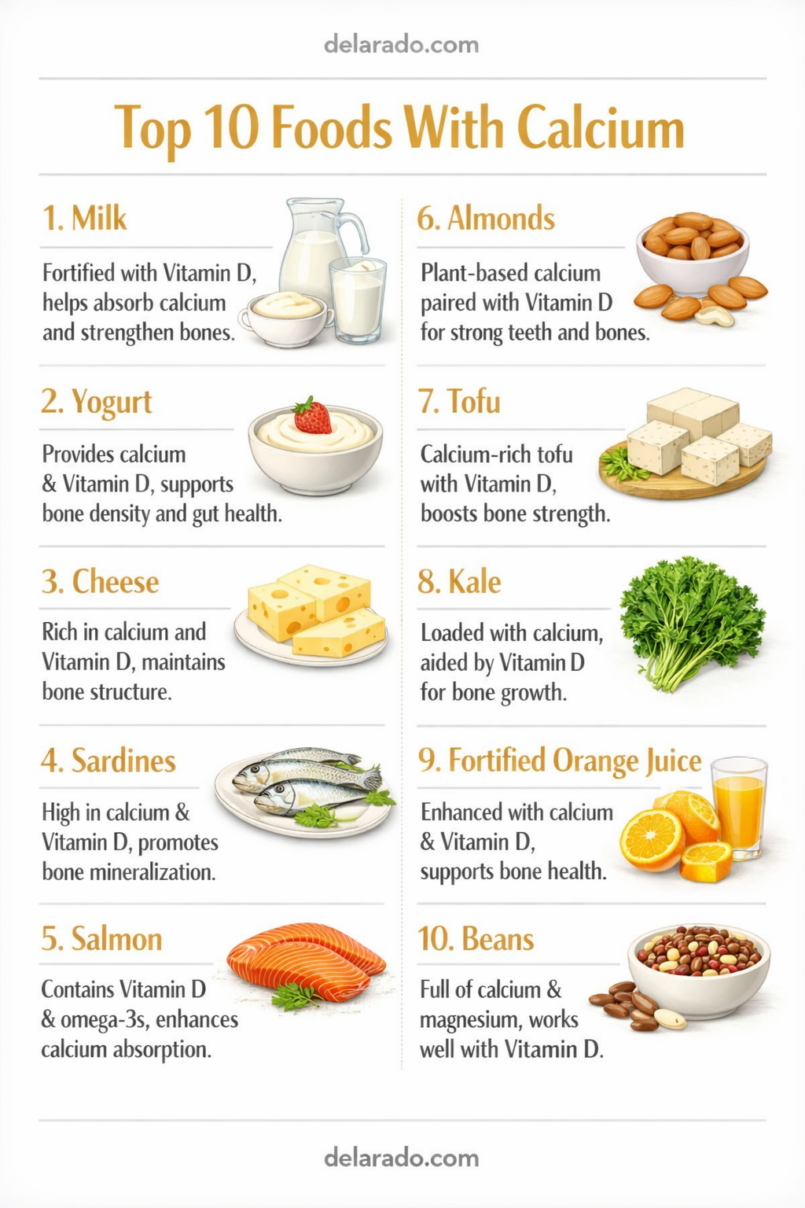
Top 10 Foods with Calcium
1. Milk
Milk is a classic source of calcium. Fortified varieties include Vitamin D, which helps your body absorb calcium efficiently, strengthening bones and teeth while supporting muscle and nerve function.
2. Yogurt
Yogurt provides calcium and Vitamin D together, promoting bone density and digestive health. The probiotics enhance nutrient absorption, making it a daily powerhouse for skeletal support.
3. Cheese
Cheese is rich in calcium and often contains Vitamin D naturally or through fortification. This combination helps maintain bone structure, supports nerve signaling, and aids muscle contraction.
4. Sardines
Sardines deliver calcium from their edible bones and Vitamin D from their oily flesh. Together, they improve bone mineralization and reduce the risk of osteoporosis.
5. Salmon
Salmon provides Vitamin D and omega‑3s, which help your body absorb calcium and maintain joint flexibility. It’s a nutrient‑dense choice for bone and heart health.
6. Almonds
Almonds are plant‑based sources of calcium and magnesium. When paired with Vitamin D‑rich foods, they help regulate calcium levels and support strong teeth and bones.
7. Tofu
Calcium‑set tofu offers a vegan‑friendly way to boost calcium intake. When consumed with Vitamin D sources, it enhances bone strength and supports muscle recovery.
8. Kale
Kale is packed with calcium and antioxidants. Vitamin D helps the body utilize this calcium effectively, promoting bone growth and preventing calcium loss.
9. Fortified Orange Juice
Fortified orange juice combines calcium and Vitamin D, making it an easy morning boost for bone health. The Vitamin C also aids collagen formation for stronger connective tissue.
10. Beans
Beans contain calcium, magnesium, and phosphorus. When paired with Vitamin D‑rich foods, they help maintain bone density and support overall metabolic health.