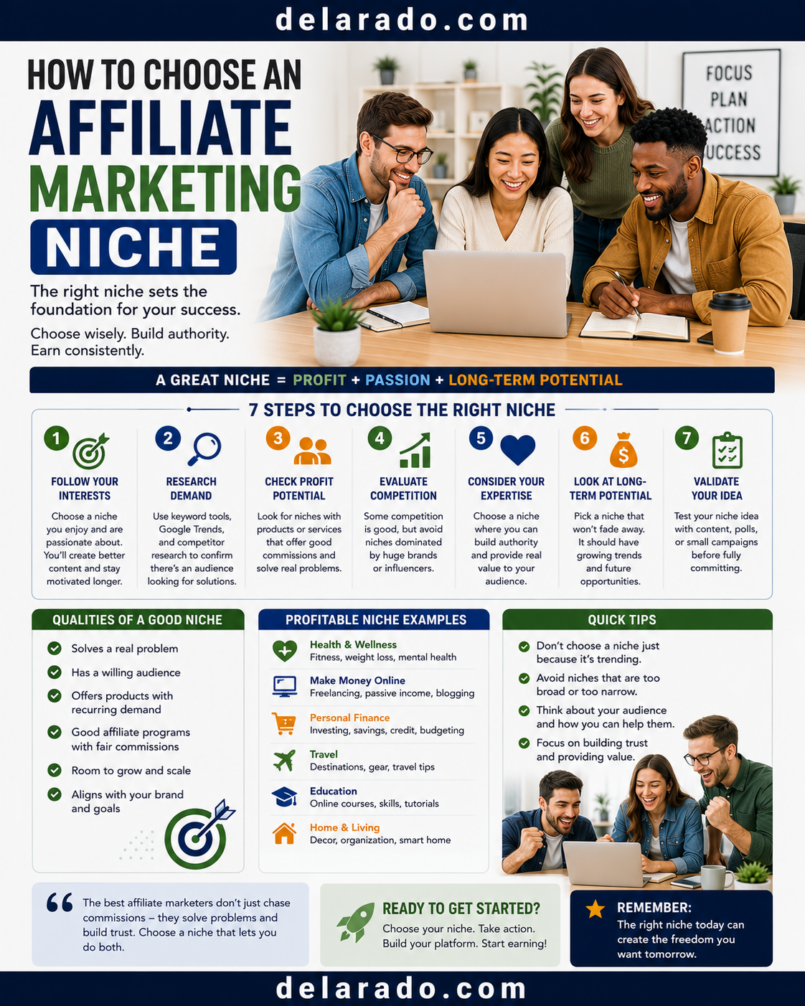
To choose an affiliate marketing niche, look for the overlap between a specific audience, a real problem, useful products or services, and a topic you can create helpful content about consistently. A good niche is not simply a product category that pays high commissions. It is a focused area where you can build trust by helping people make better decisions.
The best affiliate niche for you should have a clear audience, recurring questions, legitimate products to recommend, enough content ideas to sustain your work, and a connection to your knowledge, interests, experience, or willingness to learn responsibly.
Who Is This Topic For?
This guide is for new affiliate marketers, bloggers, YouTubers, social-media creators, newsletter writers, freelancers, consultants, niche website owners, and anyone deciding what topic to focus on before joining affiliate programs.
This Article Is Helpful If You Want To:
- Choose your first affiliate niche
- Start a niche website
- Create an affiliate YouTube channel
- Find content ideas for affiliate marketing
- Choose products to recommend responsibly
- Build an audience around a specific topic
- Avoid overly broad topics
- Find a niche that matches your skills
- Research affiliate programs
- Create a sustainable content plan
What Is an Affiliate Niche?
An affiliate niche is a focused topic area and audience that you serve through content, recommendations, reviews, tutorials, comparisons, and resources.
A niche is more specific than a broad category. “Technology” is broad. “WordPress tools for beginner bloggers” is a niche. “Fitness” is broad. “Home workout equipment for busy beginners in small apartments” is a niche.
Broad Category vs. Niche
| Broad Category | More Focused Niche |
|---|---|
| Technology | Website tools for beginner bloggers |
| Fitness | Home workout tools for beginners with limited space |
| Photography | Travel photography equipment for beginner creators |
| Cooking | Kitchen tools for beginner home bakers |
| Business | Productivity tools for solo freelancers |
| Home improvement | Apartment organization tools for renters |
| Outdoor gear | Weekend hiking equipment for beginners |
| Education | Online learning tools for adult career changers |
A focused niche helps people understand why they should follow your content and makes it easier for you to choose relevant products, create useful resources, and develop trust.
Why Choosing a Niche Matters
Helps You Understand the Audience
When your topic is focused, you can learn the questions, concerns, budget limits, goals, and buying decisions your audience has.
Makes Content Easier to Plan
A niche gives you a clear pool of article, video, email, and social-content ideas. You can create beginner guides, comparisons, product reviews, tutorials, checklists, and troubleshooting resources around the same topic.
Builds Trust More Easily
People are more likely to trust recommendations from a creator who consistently helps them solve related problems than from someone who promotes unrelated products every week.
Improves Product Relevance
A focused audience makes it easier to recommend products that actually fit the person’s needs instead of adding random affiliate links for commission opportunities.
Helps Search and Content Discovery
When your website or channel covers connected topics, it can be easier for visitors to understand what you offer and find related helpful content.
Supports Better Email Marketing
A focused niche makes it easier to create relevant lead magnets, welcome sequences, newsletters, product comparisons, and recommendations.
Creates a More Sustainable Business
A niche can help you build a content library, audience relationship, resource collection, product strategy, and long-term brand rather than chasing random trends.
Benefits of a Good Affiliate Niche
Clear Audience Positioning
People can quickly understand who your content is for and what type of help they can expect.
More Useful Recommendations
You can recommend products based on real audience needs, common questions, budget concerns, and use cases.
Stronger Content Ideas
A niche gives you many connected topics, including beginner guides, product reviews, comparison articles, checklists, tutorials, alternatives, and frequently asked questions.
Better Audience Trust
Repeatedly helping people in one area can build credibility. Trust grows when your recommendations are relevant, transparent, accurate, and honest about limitations.
More Relevant Lead Magnets
You can create focused resources such as a buyer checklist, setup guide, product comparison worksheet, template, or beginner roadmap that attracts the right subscribers.
More Focused Product Selection
Rather than joining every affiliate program available, you can focus on programs connected to the products your audience is likely to need.
Better Long-Term Brand Potential
A niche can grow into a recognizable brand, newsletter, course, consulting service, community, product line, or resource library over time.
Risks and Limitations
A Niche Can Be Too Broad
If your topic covers too many unrelated products or audiences, it can be difficult to build trust or create a consistent content strategy.
A Niche Can Be Too Narrow
If the audience, problem, or product category is extremely limited, you may run out of useful content ideas or have too few relevant products to recommend.
High Commission Does Not Mean Good Fit
Do not choose a niche simply because it has expensive products or high commissions. A product that does not fit your audience can damage trust.
Interest Alone Is Not Enough
You may enjoy a topic, but you still need to determine whether people have questions, buying decisions, and legitimate products or services connected to it.
Competition Exists in Most Niches
Competition is not automatically a reason to avoid a niche. It can show that an audience exists. The important question is whether you can add a useful angle, clearer explanations, better organization, firsthand experience, or a more specific audience focus.
Some Niches Carry Higher Responsibility
Health, finance, law, insurance, supplements, safety, children’s products, gambling, and other sensitive topics may require more expertise, compliance, disclosures, and professional review.
Trends Can Change
A niche built entirely around a short-lived trend, one product, or one platform may be less stable than a niche based on an ongoing audience problem.
The Best Niche Formula
A useful affiliate niche usually sits at the intersection of four areas:
\[
\text{Audience} + \text{Problem} + \text{Useful Products} + \text{Content You Can Sustain}
\]
Audience
Who are you helping?
Problem
What are they trying to learn, fix, compare, improve, or accomplish?
Useful Products
What legitimate products, services, tools, or resources may help them?
Sustainable Content
Can you create helpful content about this topic for months or years without repeating the same shallow advice?
Example
Audience: Beginner website owners
Problem: They do not know how to plan, build, and manage a WordPress website
Useful products: Hosting, themes, plugins, email tools, security tools, design tools, templates
Sustainable content: Website planning, domains, hosting, WordPress setup, pages, backups, SEO, email lists, content, troubleshooting
This is a stronger niche than simply saying “I promote software.”
Step-by-Step Process
Step 1: List Your Interests and Experience
Start by listing topics you already know, enjoy, use, have worked in, or are willing to study responsibly. You do not need to be the world’s top expert, but you should be able to help people accurately and honestly.
Questions to Ask
- What topics do I enjoy learning about?
- What products or tools do I already use?
- What problems have I solved for myself or others?
- What work experience do I have?
- What hobbies do I understand?
- What questions do friends, clients, or coworkers ask me?
- What topic could I write or talk about consistently?
- What topic would I be comfortable researching deeply?
Example Starting List
- WordPress websites
- Graphic design tools
- Content marketing
- Home coffee brewing
- Photography
- Organization systems
- Remote work tools
- Travel planning
Do not choose a niche only because someone else claims it is profitable. You will need enough interest to keep learning and producing useful content.
Step 2: Identify Audience Problems
For each topic on your list, identify the specific problems people are trying to solve. Affiliate content works best when it helps people make informed decisions.
Sources of Audience Questions
- Search suggestions
- Customer emails
- Support tickets
- Social-media comments
- YouTube comments
- Product reviews
- Online communities
- Frequently asked questions
- Sales calls
- Forums and discussion groups
- Questions from friends or clients
Example: Website Tools
- What is the difference between a domain and hosting?
- Which WordPress theme should beginners choose?
- What plugins does a new site need?
- How do I back up a website?
- How do I create an email signup form?
- What should a small-business website include?
- How do I choose an email marketing tool?
Example: Home Coffee
- What coffee grinder should a beginner buy?
- What is the difference between a French press and pour-over?
- How do I choose a coffee scale?
- What tools are needed for espresso at home?
- How do I store coffee beans?
A useful niche has many recurring audience questions—not just one product to promote.
Step 3: Check Product Availability
Look for legitimate products, tools, services, subscriptions, books, courses, accessories, or platforms that fit the audience’s problems.
Product Research Questions
- Are there products people genuinely need?
- Are there different price levels?
- Are there beginner and advanced options?
- Are there accessories, upgrades, or related tools?
- Are there reputable companies in the space?
- Do those companies offer affiliate programs?
- Are products likely to remain relevant over time?
- Can you explain who each product is best for?
Example Product Ecosystem: Beginner Website Owners
- Domain registration
- Web hosting
- WordPress themes
- WordPress plugins
- Email marketing software
- Website backup tools
- Graphic design tools
- SEO tools
- Course platforms
- Website templates
Do not assume every useful product has an affiliate program. You can still create helpful content about products without earning a commission from all of them.
Step 4: Check Content Depth
A sustainable niche needs enough content depth to support helpful articles, videos, emails, and resources over time.
Content Depth Questions
- Can I list at least 30 useful content ideas?
- Are there beginner, intermediate, and advanced questions?
- Are there tutorials, comparisons, and troubleshooting topics?
- Are there seasonal or updated topics?
- Can I create lead magnets for this audience?
- Can I explain product alternatives?
- Can I create content without promoting a product every time?
- Can I update content as products change?
Example Content Categories
| Content Category | Example Topic |
|---|---|
| Beginner guide | What Is Web Hosting? |
| How-to tutorial | How to Install WordPress |
| Comparison | Shared Hosting vs. Managed Hosting |
| Buyer guide | What to Compare Before Choosing a Hosting Plan |
| Review | Is This WordPress Theme Good for Beginners? |
| Troubleshooting | Why Is My WordPress Website Slow? |
| Checklist | Website Launch Checklist for Beginners |
| Alternatives | Alternatives to Popular Email Marketing Tools |
If you cannot create many useful content ideas, the niche may be too narrow or based too heavily on one product.
Step 5: Evaluate Competition
Competition is not automatically a bad sign. It often shows that an audience exists and people are searching for help. Instead of trying to find a niche with no competition, look for ways to be more useful or more specific.
Ways to Differentiate
- Serve beginners instead of everyone
- Focus on a specific use case
- Create clearer tutorials
- Use original screenshots or demonstrations
- Explain limitations honestly
- Compare products by audience type
- Create checklists and worksheets
- Use firsthand experience where applicable
- Offer better organization and navigation
- Update content more consistently
Example
Instead of creating a broad website called “Best Software Tools,” create content for “Beginner WordPress Website Setup.”
Instead of publishing “Best Cameras,” create “Travel Cameras for Beginner Creators Who Want Lightweight Gear.”
Specific positioning helps your content stand out without needing to make exaggerated claims.
Step 6: Review Affiliate Program Rules
Before committing to a niche, review whether relevant affiliate programs allow the promotional methods you plan to use.
Check for:
- Commission rate
- Cookie duration
- Minimum payout threshold
- Payment method
- Payment schedule
- Refund reversal rules
- Email marketing permissions
- Social-media rules
- Paid advertising rules
- Trademark bidding restrictions
- Coupon and discount rules
- Link-shortening rules
- Required disclosures
- Geographic restrictions
- Account termination rules
Do not build your entire business around one affiliate program. Programs can change terms, lower commission rates, close applications, or remove products.
Step 7: Score Your Niche Ideas
Create a simple scoring system to compare ideas. This helps you choose based on audience value and sustainability rather than hype.
| Question | Score From 1 to 5 |
|---|---|
| Do I understand or genuinely enjoy this topic? | 1 = very little interest; 5 = strong interest and willingness to learn |
| Does a specific audience have recurring questions? | 1 = unclear need; 5 = many clear questions |
| Are there useful products or services to recommend? | 1 = very limited; 5 = strong product ecosystem |
| Can I create at least 30 helpful content ideas? | 1 = few ideas; 5 = many sustainable ideas |
| Can I provide an original angle? | 1 = no clear angle; 5 = strong audience or experience angle |
| Can I discuss the topic responsibly? | 1 = high risk or limited knowledge; 5 = comfortable and responsible |
| Can I continue working in this niche for a year? | 1 = unlikely; 5 = highly likely |
Example Scoring
| Niche Idea | Interest | Audience Questions | Products | Content Depth | Total |
|---|---|---|---|---|---|
| WordPress tools for beginners | 5 | 5 | 5 | 5 | 20 |
| General technology products | 3 | 5 | 5 | 5 | 18 |
| Vintage calculator accessories | 4 | 1 | 1 | 2 | 8 |
A score does not make the decision for you, but it can show which topic has the strongest combination of audience need, product relevance, content depth, and personal sustainability.
Step 8: Test the Niche With Content
You do not need to commit forever before publishing anything. Test a niche with a small set of useful content and pay attention to what your audience responds to.
Simple 30-Day Test
- Choose one focused niche idea
- List 10 audience questions
- Create three helpful articles or videos
- Create one lead magnet or checklist
- Publish content consistently
- Ask for comments or feedback
- Track clicks, questions, saves, and signups
- Review whether you enjoy creating content in the niche
Example Test Content
Article 1: What Is Web Hosting?
Article 2: How to Choose WordPress Hosting for Beginners
Video: Three Hosting Features New Website Owners Should Compare
Lead magnet: Website Launch Checklist
Do not judge a niche only by immediate commissions. Look at audience questions, engagement, your ability to create helpful content, and the long-term usefulness of the topic.
Step 9: Build a Simple Content Plan
Once you choose a niche, create content pillars so your website or channel has a clear structure.
Example Content Pillars: Beginner Website Tools
- Website planning
- Domains and hosting
- WordPress setup
- WordPress themes and plugins
- Email marketing tools
- Website security and backups
- Content marketing basics
- SEO basics
Example Content Pillars: Home Coffee for Beginners
- Coffee brewing methods
- Grinders and equipment
- Coffee beans and storage
- Beginner brewing guides
- Cleaning and maintenance
- Budget equipment choices
- Product comparisons
- Troubleshooting common coffee problems
Content pillars make it easier to create connected articles, videos, newsletters, and lead magnets without repeating yourself.
Step 10: Build Trust Before Monetizing Aggressively
When starting, focus on helping people. You can use affiliate links where relevant, but do not turn every article, video, or email into a sales message.
Ways to Build Trust
- Answer real audience questions
- Explain products in plain language
- Share limitations and trade-offs
- Recommend alternatives when appropriate
- Use clear affiliate disclosures
- Keep pricing information current
- Correct mistakes when you find them
- Use real examples
- Respond honestly to questions
- Remove products you no longer recommend
Example Honest Recommendation
This hosting plan may be useful for a beginner who wants simple setup and basic support. It may not be the best fit for a large, high-traffic website or a business that needs advanced server controls.
Honest limitations can make your content more trustworthy than exaggerated promises.
Affiliate Niche Ideas
Website and Blogging
- WordPress setup for beginners
- Web hosting comparisons
- Website themes and templates
- Email marketing tools
- SEO tools for small businesses
- Content creation tools
- Website security and backup tools
- Online course platforms
Creator Tools
- Video editing tools
- Podcasting equipment
- AI tools for creators
- Graphic design tools
- Social media planning tools
- Email newsletter platforms
- Photography equipment
- Live streaming tools
Home and Lifestyle
- Apartment organization
- Home office tools
- Kitchen equipment
- Home coffee brewing
- Gardening tools
- Pet products
- DIY organization systems
- Travel planning products
Hobbies and Education
- Beginner photography
- Outdoor hiking gear
- Craft supplies
- Music learning tools
- Online learning platforms
- Language-learning resources
- Home baking tools
- Art supplies for beginners
Business and Productivity
- Tools for freelancers
- Project management software
- Business planning tools
- Accounting tools for small businesses
- Remote work equipment
- Customer support software
- Appointment scheduling tools
- Digital product platforms
Before choosing any niche, consider whether you can provide accurate, useful, and original help—not only whether affiliate programs are available.
Programs That Can Help
Affiliate Programs
Many companies run direct affiliate, partner, referral, creator, or ambassador programs. Look for these links on company websites and review all current terms before applying.
Affiliate Networks
Affiliate networks can help connect publishers with merchants and may provide tracking links, reporting, payments, and program applications. Examples include Impact, CJ, ShareASale, Awin, Rakuten Advertising, and PartnerStack.
WordPress
WordPress can help create niche websites, articles, reviews, comparison pages, resource libraries, disclosure pages, lead magnet pages, and search-focused content.
Google Search Console
Google Search Console can help identify search queries, content opportunities, pages that need updates, and questions people are asking in your niche.
Google Analytics
Google Analytics can help measure traffic, audience engagement, content performance, signup activity, and outbound affiliate-link activity when configured appropriately.
Canva
Canva can help create niche graphics, buyer checklists, comparison visuals, resource guides, lead magnets, thumbnails, social content, and email assets.
YouTube Studio
YouTube Studio can help creators publish niche tutorials and reviews, manage descriptions, review analytics, add captions, and understand audience engagement.
Email Marketing Tools
MailerLite, ConvertKit, Brevo, Mailchimp, and similar platforms can help create signup forms, deliver lead magnets, send newsletters, segment audiences, and build educational email sequences.
Common Mistakes
Choosing a Niche Only for High Commissions
High commission rates do not matter if the audience does not need the product or trust your recommendations. Choose a niche based on audience value and long-term content potential.
Choosing a Topic That Is Too Broad
“Technology,” “fitness,” or “business” may be too broad when starting. Narrow the focus to a clear audience and use case.
Choosing a Topic That Is Too Narrow
If there are very few questions, products, or content ideas, it may be difficult to create a sustainable content library.
Ignoring Audience Questions
Do not choose a niche only because you enjoy it. Make sure people have real questions and buying decisions connected to the topic.
Copying Competitors
Do not copy competitor websites, articles, reviews, comparison tables, videos, or visuals. Build an original angle and add your own helpful explanations.
Promoting Products You Do Not Understand
Do not promote tools, products, supplements, services, or financial products that you cannot explain responsibly.
Not Checking Affiliate Program Terms
Programs may restrict paid ads, email promotion, social content, link shortening, coupon use, trademark bidding, and other promotion methods. Review the rules before building content around a program.
Using Fake Reviews or Testimonials
Do not create fake customer stories, fabricated results, AI-generated testimonials, false screenshots, invented ratings, or claims of personal product use when you have not used the product.
Not Disclosing Affiliate Relationships
Use clear disclosures near affiliate links and recommendations. Do not hide the relationship in a footer or a separate legal page.
Giving Up Too Early
A niche may need time to develop. Focus on creating helpful content, gathering audience feedback, refining your positioning, and learning what topics people respond to.
Frequently Asked Questions
What is an affiliate marketing niche?
An affiliate marketing niche is a focused topic and audience you serve through helpful content, product recommendations, reviews, comparisons, tutorials, and resources.
How do I choose a profitable affiliate niche?
Choose a niche where a specific audience has recurring problems, useful products exist, content ideas are sustainable, and you can provide helpful original information. Do not choose only based on commission rates.
Should I choose a niche I am passionate about?
Interest is useful because it helps you stay consistent, but also check whether people have real questions, products exist, and you can create helpful content over time.
How narrow should my affiliate niche be?
Choose a topic narrow enough that a specific audience understands who you help, but broad enough to support many useful content ideas, products, questions, and subtopics.
Can I have more than one affiliate niche?
You can, but beginners often benefit from starting with one focused niche. Once you understand the audience and have a stable content process, you can expand into related topics or separate projects.
What if my niche has a lot of competition?
Competition can show that an audience exists. Focus on being more helpful, more specific, better organized, more current, or more relevant to a defined group of people.
What if there are no affiliate programs in my niche?
You can still build content and an audience. You may later monetize with your own digital products, services, sponsorships, advertising, consulting, memberships, or related products that fit the topic.
How do I know if a niche has enough content ideas?
Try listing at least 30 useful topics across beginner guides, tutorials, comparisons, reviews, buyer guides, troubleshooting, checklists, alternatives, and frequently asked questions.
Should I choose a niche based on high-ticket products?
High-ticket products may offer larger commissions, but they can also require more trust, a longer decision process, stronger content, and more customer research. Audience fit matters more than product price alone.
What niches should beginners avoid?
Be cautious with niches involving health, legal advice, financial advice, insurance, supplements, safety, gambling, children’s products, and other sensitive topics unless you have appropriate knowledge, qualifications, review processes, and compliance awareness.
What is the best first step after choosing a niche?
Create a simple content plan based on audience questions. Publish a few helpful beginner guides, create a relevant lead magnet, research suitable affiliate programs, and build trust before adding many product links.